










Breaking News
 Is Big Pharma Selling Postpartum Depression to New Moms?
 Make Men Men Again: Low T Is Now a National Defense Problem
 Druski: They're Lying To You About Overnight Success!
 $6.27 Diesel Just Hit Harvest. The Grocery Aisle Hasn't Felt It Yet.
Top Tech News
 Tesla Model 3 killer charges from 10 to 97% in just 9 minutes
 World-first unpowered DNA computer sets speed record
 I Power 5 Buildings Off-Grid. Here's How
 The US government is pushing hard to get a working nuclear fission reactor into space by late 2028
 SpaceX Starmind AI in Space Radiator
 China Will Dominate Global Nuclear Energy Through 2035, Analyst Says
 These Absolutely Wild-Looking EVs Are Saudi Arabia's First Homegrown Cars
 BEYOND THE MOON: NASA plans a nuclear-powered fleet to push DEEPER into space
 Big Oil Backs Mazama's $135 Million Bet On Superhot Geothermal
 Quantum compass takes flight on Northrop's Lumberjack drone


Come on Hollywood, Give Us an X Prize Movie Already
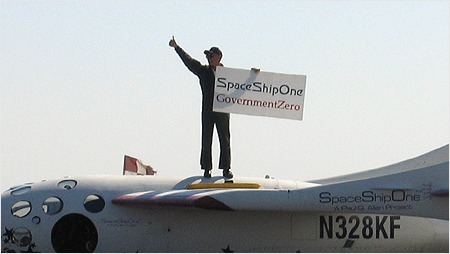
That'll change this month with the publication of Julian Guthrie's new book How to Make a Spaceship.
Writing the book required Guthrie, an award-winning journalist, to immerse herself in the world of aeronautics.
"It was a very steep learning curve for me," Guthrie says in Episode 221 of the Geek's Guide to the Galaxy podcast. "Literally it's rocket science."
The book focuses on Peter Diamandis, who was so driven to get to space that he announced the $10 million X Prize without having any idea where the money was going to come from. The decade-long fundraising crusade that ensued was so full of twists, turns, and nail-biters that Guthrie found it harrowing just to write about.
"I was like, 'Oh my god, isn't someone ever going to say yes to this guy?'" she says. "It was very stressful."