










Breaking News
 The Economist Who Predicted 2008 Explains China's Endgame
 Charlie Kirk SNAPS at Anti White Masked ANTIFA
 Episode 488: THE FAUCI FIRESTORM
 Discussion with Glen Diesen
Top Tech News
 Voyager 1 approaches one light day from Earth
 Visual Implants
 Renewable Energy Breakthrough! World's Most Efficient Tesla Turbine System
 I Told You So
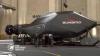 Meet Sunbird, a nuclear fusion-powered space tug concept from Pulsar Fusion.
 China and Russia launch 29-nation AI alliance to rival western control of technology
 BREAKING: China has begun manufacturing domestically developed Immersion Deep...
 Idaho's High Desert Becomes Hot Spot For Nuclear Power Revolution
 The World's Largest Electric Aircraft Is About to Take Its First Flight
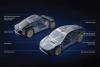 Tesla Cybercabs and Superchargers Will Act as Mini Cell Towers for SpaceX Starlink



How Lightning Can Kill 300 Reindeer With One Strike

More than 300 reindeer corpses were found piled up and strewn across the mountainside, in a natural massacre that Norwegian officials are calling the deadliest lightning strike in their country's history. Of course, lightning strikes are not uncommon, nor are animals getting killed by them. Sheep, cattle, bison, geese, elephants, and even seals have been struck down by the dozens. So it's really the scale of the Norway event that is puzzling experts.
At this time, the Norwegian Environmental Agency has not released details of the investigation, but some scientists are formulating a few theories of their own. And they all involve some very basic principles of electromagnetism.
When Glenn Shaw saw the news from Norway over the weekend, he felt deja vu. A now-retired lightning researcher, he remembered being in a helicopter flying over the Alaska Range back in 1972 and coming upon a similarly grisly scene: 53 dead caribou on the side of a mountain.