










Breaking News
 THEY OWN THE OFFSPRING | Gene-Edited Livestock Are Here
 Ben Shapiro to America: Shut Up and Eat Your Goyslop
 The Homeless Industrial Complex:
 The Lucid Cosmos Will Have More Range Than Any Tesla
Top Tech News
 Vitalik Buterin Says Ethereum Is Betting Its Future On Quantum Security And AI
 Everything You Wanted To Know About Building A Cheap AI Setup (That Still Works)...
 If They Were Human, They'd Be Arrested. Experts Respond To Rogue AI Breaches
 Sodium Ion Batteries Will be 80% Cheaper & Last LONGER!
 German startup SAXON Q has introduced a diamond-based quantum computing system...
 Elon Musk To Build The Largest Building In The World - 100 Million Square Feet
 Bitcoin 'Red Team' Says AI Is Finding 100s Of Critical Exploits Across Core Projects
 EG4 Power Pro VS Ruixu Lithi VS Yixiang Budget Battery! Best Selling Battery Showdown!
 Insect wings can kill bacteria without any chemicals!
 Tesla Never Made An Electric Jet Boat, So This YouTuber Built One Himself



Embryonic gene Nanog reverses aging in adult stem cells
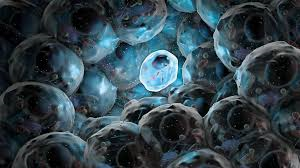
The fountain of youth may reside in an embryonic stem cell gene named Nanog.
In a series of experiments at the University at Buffalo, the gene kicked into action dormant cellular processes that are key to preventing weak bones, clogged arteries and other telltale signs of growing old.
The findings, published June 29 in the journal Stem Cells, also show promise in counteracting premature aging disorders such as Hutchinson-Gilford progeria syndrome.
"Our research into Nanog is helping us to better understand the process of aging and ultimately how to reverse it," says Stelios T. Andreadis, PhD, professor and chair of the Department of Chemical and Biological Engineering at the UB School of Engineering and Applied Sciences, and the study's lead author.
Additional authors come from UB's Department of Biomedical Engineering, a joint program between UB's engineering school and the Jacobs School of Medicine and Biomedical Sciences at UB, and the Department of Biostatistics and Bioinformatics at Roswell Park Cancer Institute in Buffalo.