










Breaking News
 EXCERPTS: Citigroup Inc. received approval to launch a wholly-owned securities business...
 The Crown Wants It Kept Secret: AG Asks the Federal Court to Seal Information...
 The Supreme Court Just Denied Your Constitutional Rights
 The state is trying to crush the Amish with ruinous penalties.
Top Tech News
 Modular phone promises total privacy at the flick of a switch
 Genetically Engineered War Dogs for 134 Pound Cyborg Dire Wolves Now – Later 600 Pound Wolves
 They're Quietly REPLACING Our Food With THIS… And Nobody Is Talking About It!
 Chicago Opens First "Teacher-Free" AI School as Global Push Accelerates
 Solar Panels Are Doing Something Nobody Expected
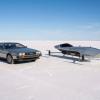 DeLorean climbs skyward to race electric flying cars
 Atari's 800XL returns with a keyboard, cartridges and BASIC
 Bioinspired robot airdrops into remote waters via morphing wing-sail
 Anduril interceptor adapts to emerging threats via swappable stages
 I Built a Website to Expose Solar and Battery Scams


Belgian scientists make novel water-from-urine machine

While there are other options for treating waste water, the system applied at the University of Ghent uses a special membrane, is said to be energy-efficient and to be applicable in areas off the electricity grid.
"We're able to recover fertilizer and drinking water from urine using just a simple process and solar energy," said University of Ghent researcher Sebastiaan Derese.
The urine is collected in a big tank, heated in a solar-powered boiler before passing through the membrane where the water is recovered and nutrients such as potassium, nitrogen and phosphorus are separated.
Under the slogan #peeforscience, the team recently deployed the machine at a 10-day music and theatre festival in central Ghent, recovering 1,000 litres of water from the urine of revellers.
The aim is to install larger versions of the machine in sports venues or airports but also to take it to a rural community in the developing world where fertilisers and reliable drinking water are short in supply, Derese said.