










Breaking News
 The Economist Who Predicted 2008 Explains China's Endgame
 Charlie Kirk SNAPS at Anti White Masked ANTIFA
 Episode 488: THE FAUCI FIRESTORM
 Discussion with Glen Diesen
Top Tech News
 Voyager 1 approaches one light day from Earth
 Visual Implants
 Renewable Energy Breakthrough! World's Most Efficient Tesla Turbine System
 I Told You So
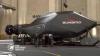 Meet Sunbird, a nuclear fusion-powered space tug concept from Pulsar Fusion.
 China and Russia launch 29-nation AI alliance to rival western control of technology
 BREAKING: China has begun manufacturing domestically developed Immersion Deep...
 Idaho's High Desert Becomes Hot Spot For Nuclear Power Revolution
 The World's Largest Electric Aircraft Is About to Take Its First Flight
 Tesla Cybercabs and Superchargers Will Act as Mini Cell Towers for SpaceX Starlink



We might finally have a way to build circuits for the world's first quantum computers
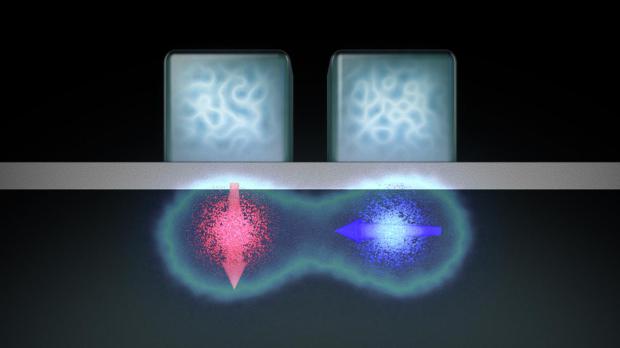
The biggest challenge in scaling up a quantum computer is figuring out how to entangle enough quantum bits (qubits) to perform calculations, but a team of engineers in the US say they might finally have a solution.
Quantum computers are set to revolutionise how we process data in the future, because they're not limited to the 1s and 0s of binary code that today's computers rely on. That binary code is holding us back, because if you can only use a combination of 1s and 0s, there's a finite amount of data that can be processed, no matter how fast you go.
Instead, quantum computers use qubits, which can essentially take the state of 0, 1, or a 'superposition' of the two. So rather than having bits that can only be 1 or 0 at any given moment, qubits can be anything and everything.
As Todd Jaquith explains for Futurism:
"Quantum computers exploit three very unusual features that operate at the quantum scale - that electrons can be both particles and waves, that objects can be in many places at once, and that they can maintain an instantaneous connection even when separated by vast distances (a property called 'entanglement')."