










Breaking News
 The Economist Who Predicted 2008 Explains China's Endgame
 Charlie Kirk SNAPS at Anti White Masked ANTIFA
 Episode 488: THE FAUCI FIRESTORM
 Discussion with Glen Diesen
Top Tech News
 Voyager 1 approaches one light day from Earth
 Visual Implants
 Renewable Energy Breakthrough! World's Most Efficient Tesla Turbine System
 I Told You So
 Meet Sunbird, a nuclear fusion-powered space tug concept from Pulsar Fusion.
 China and Russia launch 29-nation AI alliance to rival western control of technology
 BREAKING: China has begun manufacturing domestically developed Immersion Deep...
 Idaho's High Desert Becomes Hot Spot For Nuclear Power Revolution
 The World's Largest Electric Aircraft Is About to Take Its First Flight
 Tesla Cybercabs and Superchargers Will Act as Mini Cell Towers for SpaceX Starlink



NASA To Install Solar System-Wide Internet On The ISS
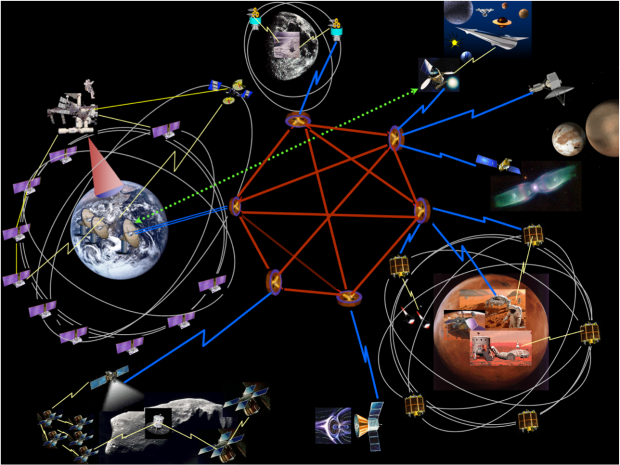
NASA is on a mission to improve communications between travelers in space and on Earth and is one step closer to doing so now that it has installed the first deployment of a new technology at the International Space Station (ISS).
The new system, called Delay/Disruption Tolerant Networking (DTN), aims to provide uninterrupted connections between people in space and on the planet for not-so-distant space exploration. Basically, it's internet – for the whole solar system.
The DTN's installation is being celebrated because it works differently to Earth's wireless. For example, when an internet signal on this planet is blocked, the connection slows or is disrupted completely. In the past, this prevented the ISS from sending transmissions as large objects – such as planets, other space crafts, and radiation waves – made the signal low. In effect, data was sometimes lost during transmissions. With a solar system-wide internet, however, the network can function even when a recipient server is offline.
As you may have heard, the government organization aims to recruit farmers, teachers, surveyors, and technicians to explore Mars by 2030. Undoubtedly, having solar system-wide internet will assist in that endeavor.