










Breaking News
 Is Big Pharma Selling Postpartum Depression to New Moms?
 Make Men Men Again: Low T Is Now a National Defense Problem
 Druski: They're Lying To You About Overnight Success!
 $6.27 Diesel Just Hit Harvest. The Grocery Aisle Hasn't Felt It Yet.
Top Tech News
 Tesla Model 3 killer charges from 10 to 97% in just 9 minutes
 World-first unpowered DNA computer sets speed record
 I Power 5 Buildings Off-Grid. Here's How
 The US government is pushing hard to get a working nuclear fission reactor into space by late 2028
 SpaceX Starmind AI in Space Radiator
 China Will Dominate Global Nuclear Energy Through 2035, Analyst Says
 These Absolutely Wild-Looking EVs Are Saudi Arabia's First Homegrown Cars
 BEYOND THE MOON: NASA plans a nuclear-powered fleet to push DEEPER into space
 Big Oil Backs Mazama's $135 Million Bet On Superhot Geothermal
 Quantum compass takes flight on Northrop's Lumberjack drone


Scientists Are Planting False Experiences Into Peoples' Brains, Inception-Style
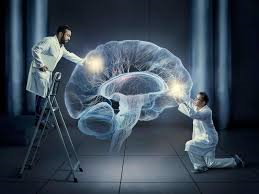
In the future, we might be able to go to a doctor and have new memories or experiences incepted into our brains.
Researchers set out to explore induced associative learning by planting simple subliminal messages in participants' minds. Without knowing what they were being trained to do, the subjects were taught to see red when presented with pictures of black and white stripes, and to see red more often than green whenever they looked at these slatted lines.
While lying in an MRI machine, they were told to "try to somehow regulate your brain activity." Only that. Not to imagine anything specific. Using neurofeedback and a higher paycheck whenever their brains lit up in "red" activity, the test subjects consistently saw red — without any idea that this is what they were trained to do.