










Breaking News
 The Economist Who Predicted 2008 Explains China's Endgame
 Charlie Kirk SNAPS at Anti White Masked ANTIFA
 Episode 488: THE FAUCI FIRESTORM
 Discussion with Glen Diesen
Top Tech News
 Voyager 1 approaches one light day from Earth
 Visual Implants
 Renewable Energy Breakthrough! World's Most Efficient Tesla Turbine System
 I Told You So
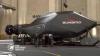 Meet Sunbird, a nuclear fusion-powered space tug concept from Pulsar Fusion.
 China and Russia launch 29-nation AI alliance to rival western control of technology
 BREAKING: China has begun manufacturing domestically developed Immersion Deep...
 Idaho's High Desert Becomes Hot Spot For Nuclear Power Revolution
 The World's Largest Electric Aircraft Is About to Take Its First Flight
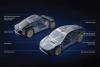 Tesla Cybercabs and Superchargers Will Act as Mini Cell Towers for SpaceX Starlink



?Chemists just named 4 new elements on the periodic table
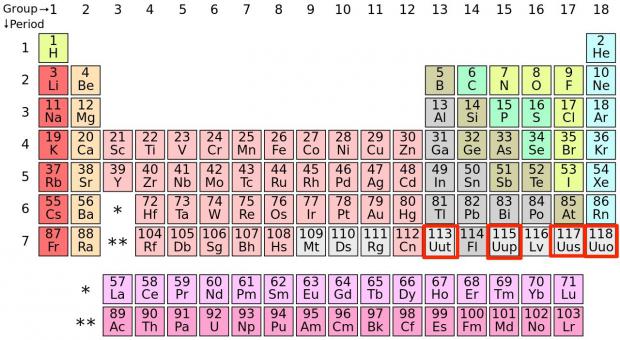
Respectively, those symbols — all of them temporary placeholders — stand for ununtrium, ununpentium, ununseptium, and ununoctium.
But the International Union of Pure and Applied Chemistry (IUPAC) has just decided on some new and permanent names: nihonium, moscovium, tennessine, and oganesson.
They aren't substances you'd recognize. In fact, you'll probably never, ever see the newly named elements in real life. They were created in high-tech labs by scientists hurling smaller atoms at each other until they made something larger. (The scientific equivalent of throwing spaghetti at a wall and hoping it sticks.)
Each name was proposed by the research team that created the element, and the names show that personal connection. Number 113, nihonium, named for Japan (called Nihon in Japanese), is the first element to be discovered in Asia. Similarly, moscovium (115) and tennessine (117) were discovered by a team of scientists collaborating from Russia and Tennessee.