










Breaking News
 'UNFAIR': Mamdani's city-run grocer plan SLAPPED with lawsuit
 Trump Says If Iran Had a Nuclear Weapon, He Would Have Politely Called the Supreme Leader...
 Tucker Carlson: We are on the brink of a world war that ends with the use of nuclear weapons
 Who is trying to destroy the United States and the world?
Top Tech News
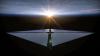 NASA Super Light Solar Sail Project Will Be 12-40 Times Lighter and Faster
 Space Telescope Interferometer to Image Exoplanet Continents
 Twenty-five years of "temporary": how 9/11 built a surveillance state Americans never vote
 I'll Never Buy Another WALMART Battery!
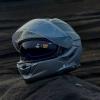 Shoei GT-Air 3 Smart helmet drops with built-in AR for $1,500
 Freezable titanium plate keeps your cooler chilled way longer than ice packs
 Review: Affordable thermal device is made for discovering life outdoors
 AI Whistleblower Tells Tucker How AI Could Kill All Humans by 2040
 You Hate Flock? Well There's More...
 Will Spiking Diesel Prices Drive Autonomous Trucking?



Falcon 9 beats the odds with nighttime barge landing
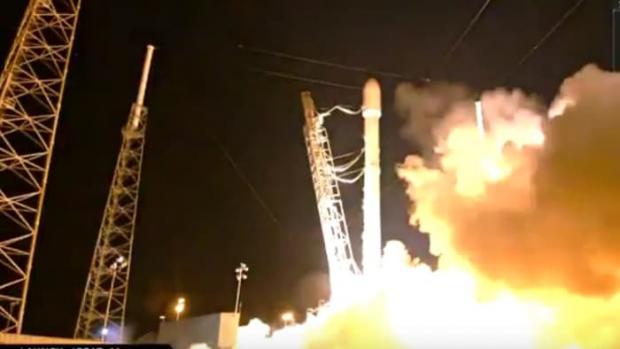
The Falcon 9 lifted off from Space Launch Complex 40 at Cape Canaveral Air Force Station, Florida, at 1:21 am EDT during a two-hour launch window. At one minute and 20 seconds into the flight, it reached the point of maximum stress (Max Q) and the first stage shut down at the two minute 38 seconds, with second stage separation three seconds later. After second stage firing was completed, its satellite payload deployed at about the 32-minute mark.
Meanwhile, the Falcon 9 booster autonomously carried out its powered reentry maneuver that brought it down on the barge, which was positioned downrange in the Atlantic Ocean. According to SpaceX, the high velocity required to return from a Geostationary Transfer Orbit trajectory combined with the low fuel reserved meant that the chances of a successful landing were poor. However, to the surprise of mission control and a crowd of spectators, the Falcon 9 landed on the droneship with what looked like almost routine ease.