










Breaking News
 The Economist Who Predicted 2008 Explains China's Endgame
 Charlie Kirk SNAPS at Anti White Masked ANTIFA
 Episode 488: THE FAUCI FIRESTORM
 Discussion with Glen Diesen
Top Tech News
 Voyager 1 approaches one light day from Earth
 Visual Implants
 Renewable Energy Breakthrough! World's Most Efficient Tesla Turbine System
 I Told You So
 Meet Sunbird, a nuclear fusion-powered space tug concept from Pulsar Fusion.
 China and Russia launch 29-nation AI alliance to rival western control of technology
 BREAKING: China has begun manufacturing domestically developed Immersion Deep...
 Idaho's High Desert Becomes Hot Spot For Nuclear Power Revolution
 The World's Largest Electric Aircraft Is About to Take Its First Flight
 Tesla Cybercabs and Superchargers Will Act as Mini Cell Towers for SpaceX Starlink



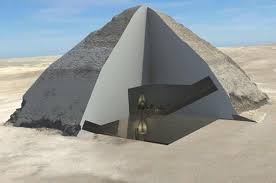
After 4,600 years, we can finally see deep inside Egypt's mysterious pyramids
The pyramids of ancient Egypt are about 4,500 years old. They have stood the test of time, great monuments on the landscape. Dusty gold and majestic.
Now we can learn a little more about them thanks to cosmic rays. Archaeologists have begun to use new technology to better refine our understanding of pyramids' internal makeup.
The new Scans Pyramids project uses cosmic rays to build "inside" maps of the Egyptian attractions. The images show the internal crooked chamber of a 4,600-year-old pyramid known as the Bent Pyramid. It's a 345-foot monument 25 miles south of Cairo.
In ancient times, the pointed building was known as the Southern Shining Pyramid. It is believed to be one of Egypt's earliest designs. It looks odd, probably built in a time of transition, when engineering moved from stepped pyramids to smooth.