










Breaking News
 Is Big Pharma Selling Postpartum Depression to New Moms?
 Make Men Men Again: Low T Is Now a National Defense Problem
 Druski: They're Lying To You About Overnight Success!
 $6.27 Diesel Just Hit Harvest. The Grocery Aisle Hasn't Felt It Yet.
Top Tech News
 Tesla Model 3 killer charges from 10 to 97% in just 9 minutes
 World-first unpowered DNA computer sets speed record
 I Power 5 Buildings Off-Grid. Here's How
 The US government is pushing hard to get a working nuclear fission reactor into space by late 2028
 SpaceX Starmind AI in Space Radiator
 China Will Dominate Global Nuclear Energy Through 2035, Analyst Says
 These Absolutely Wild-Looking EVs Are Saudi Arabia's First Homegrown Cars
 BEYOND THE MOON: NASA plans a nuclear-powered fleet to push DEEPER into space
 Big Oil Backs Mazama's $135 Million Bet On Superhot Geothermal
 Quantum compass takes flight on Northrop's Lumberjack drone


A Bitter Pill
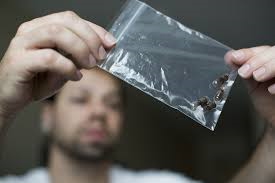
Human feces floated in saline solution in a mortar, on a marbled countertop, in a dimly lit kitchen in Burlingame, California. A bottle of ethyl alcohol, an electronic scale, test tubes, and a stack of well-worn pots and pans lay nearby. The stove light illuminated the area as Josiah Zayner crushed the shit with a pestle, creating a brownish-yellow sludge. "I think I can feel something hard in there," he said, laughing. It was probably vegetables — "the body doesn't break them down all the way."
This heralded the beginning of Zayner's bacterial makeover. He was clad in a Wu-Tang Clan T-shirt, jeans, and white socks and sandals. At his feet, James Baxter, Zayner's one-eyed orange cat, rubbed its flank against its owner's legs. The kitchen smelled like an outhouse in a busy campground.
Over the course of the next four days, Zayner would attempt to eradicate the trillions of microbes that lived on and inside his body — organisms that helped him digest food, produce vitamins and enzymes, and protected his body from other, more dangerous bacteria. Ruthlessly and methodically, he would try to render himself into a biological blank slate. Then, he would inoculate himself with a friend's microbes — a procedure he refers to as a "microbiome transplant." Zayner imagines the collection of organisms that live on him — his microbiome — as a suit. As such, it can be worn, mended, and replaced. The suit he was living with, he said, was faulty, leaving him with severe gastrointestinal pain. A new suit could solve all that. "You kind of are who you are, to a certain extent," he said. "But with your bacteria, you can change that."