










Breaking News
Immigration Causing Tribalization of America into Cultural Chaos
 The Evil Within, Part 4: The Welfare State
 Watch Live: Jack Smith Testifies Before Senate Judiciary Committee
 This Invisible Thing Hitting Your Brain Every Day Could Be Why You Suffer From Brain Fog...
Top Tech News
 Tesla Model 3 killer charges from 10 to 97% in just 9 minutes
 World-first unpowered DNA computer sets speed record
 I Power 5 Buildings Off-Grid. Here's How
 The US government is pushing hard to get a working nuclear fission reactor into space by late 2028
 SpaceX Starmind AI in Space Radiator
 China Will Dominate Global Nuclear Energy Through 2035, Analyst Says
 These Absolutely Wild-Looking EVs Are Saudi Arabia's First Homegrown Cars
 BEYOND THE MOON: NASA plans a nuclear-powered fleet to push DEEPER into space
 Big Oil Backs Mazama's $135 Million Bet On Superhot Geothermal
 Quantum compass takes flight on Northrop's Lumberjack drone


Power dense zinc-manganese power unit as cheap as a car battery
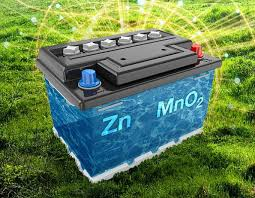
The creators claim that the new battery could become an inexpensive, ecologically-sound alternative for storing energy from renewable sources and a high-density solution for storing excess energy from the power grid.
Working at the Department of Energy's Pacific Northwest National Laboratory (PNNL), the researchers discovered a new way to approach the reliability problems of zinc-manganese batteries, that were cheap and easy to make from abundant materials, but which would fail after only a few charge cycles.
"The idea of a rechargeable zinc-manganese battery isn't new; researchers have been studying them as an inexpensive, safe alternative to lithium-ion batteries since the late 1990s," said PNNL Laboratory Fellow Jun Liu. "But these batteries usually stop working after just a few charges. Our research suggests these failures could have occurred because we failed to control chemical equilibrium in rechargeable zinc-manganese energy storage systems."