










Breaking News
 Is Big Pharma Selling Postpartum Depression to New Moms?
 Make Men Men Again: Low T Is Now a National Defense Problem
 Druski: They're Lying To You About Overnight Success!
 $6.27 Diesel Just Hit Harvest. The Grocery Aisle Hasn't Felt It Yet.
Top Tech News
 Tesla Model 3 killer charges from 10 to 97% in just 9 minutes
 World-first unpowered DNA computer sets speed record
 I Power 5 Buildings Off-Grid. Here's How
 The US government is pushing hard to get a working nuclear fission reactor into space by late 2028
 SpaceX Starmind AI in Space Radiator
 China Will Dominate Global Nuclear Energy Through 2035, Analyst Says
 These Absolutely Wild-Looking EVs Are Saudi Arabia's First Homegrown Cars
 BEYOND THE MOON: NASA plans a nuclear-powered fleet to push DEEPER into space
 Big Oil Backs Mazama's $135 Million Bet On Superhot Geothermal
 Quantum compass takes flight on Northrop's Lumberjack drone


Volvo's robot refuse collectors ROAR into life
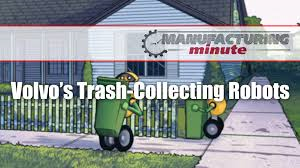
The system uses drones to locate refuse bins and robots to collect and empty them.
For the project, Volvo has collaborated with Chalmers University of Technology, Mälardalen University and Penn State University, all of which are part of its Academic Partner Program. Waste management firm Renova is also involved. The aim is to show how machines can communicate with each other and how, in the future, they will be able "to facilitate everyday life in a large number of areas."
"We predict a future with more automation," says project manager for robot development at the Volvo Group Per-Lage Götvall in a press release. "This project is intended to stimulate our imagination, to test new concepts that may shape transport solutions of the future."