










Breaking News
 Kushner, Epstein, Black Budgets & the Banker's Breakaway Civilization | Catherine Fitts
 We need a Cyberpandemic and theft of global retirement funds...
 "Do you really need a blockchain for that?"
 Drone-delivered mines? Or should that be IEDs?
Top Tech News
 The X-ray room just shrank to the size of a laptop
 Dead Simple Apocalypse Power: Build It in an Hour
 Gritt and MasTec partner to bring physical AI to solar construction sites
 Baby it's cold INSIDE! Scientists create the coldest temperature ever recorded in the lab...
 I am IN LOVE with AIRCRETE! Off-Grid, Earth-Covered Dome
 Musk's Starlink Is Building An Orbital Bypass As Undersea Cable Sabotage Threats Mount
 A robot just built a structure in space for the first time
 The Greatest Theft in Human History
 3D-Printed Tungsten Survives 74 Fusion Plasma Discharges, Advancing the Engineering...
 Dude turns a $23 used smartphone into the 4G brain of an RC aircraft.



Ford V8 crate engine brings unprecedented power to car of your choice
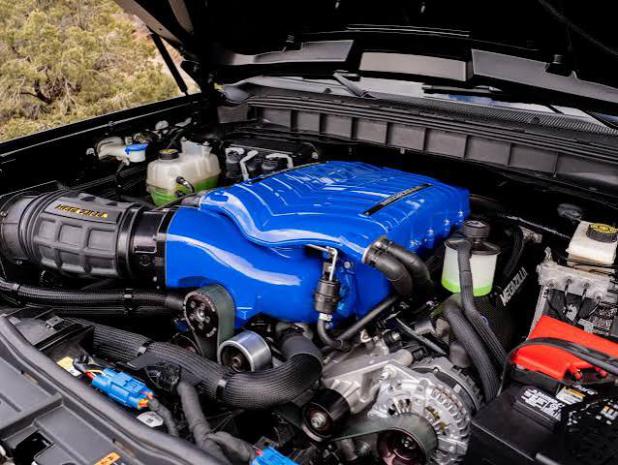
A crate engine is a complete internal combustion powerplant shipped directly from a manufacturer's factory in a wooden crate, ready to be dropped into a vehicle's engine bay. Historically, thousands of car builders and hot-rodders have used classic drop-in powerplants to transform average platforms.
For decades, home mechanics would source a legendary small-block Chevy 350 engine to turn a 1970s family cruiser into a high-powered street machine or drop a Ford 302 Windsor V8 into a lightweight classic car. Rather than spending months sourcing, cleaning and machining a high-mileage junked engine block from a salvage yard, modern DIYers purchase factory-engineered reliability and massive horsepower straight from a catalog.
We've previously noted high-profile custom builders using these crate engines for monsters like 1,000-hp 1969 Mustang Mach 1 Hitman. However, Ford's latest crate rewrites the rules for off-the-shelf powertrains.
At this year's Specialty Equipment Market Association show in Vegas, Ford Racing celebrated its 125th anniversary by dropping this nuclear option inside a radical, one-off concept built in collaboration with Kincer Chassis called the Frostwarden Bronco.
Designed with an Arctic search-and-rescue theme, the massive SUV with giant 42-inch BFGoodrich tires is a piece of theater to prove that this powerplant is a force built to tackle even impossible terrain.
The statistics behind the Megazilla 2.0 are staggering. On race fuel, the massive 7.3-liter (445-cubic-inch) engine pumps out more than 1,200 horsepower and over 1,000 lb.ft (1,356Nm) of peak torque. Its twisting force exceeds the capabilities of even the most hardcore turbo-diesel units.
The Megazilla 2.0's lineage dates back to Ford's robust cast-iron pushrod engine designed for the unglamorous Super Duty commercial truck line. Ford evolved that truck motor into the naturally aspirated Megazilla 1.0, with a respectable 612 horsepower and 670 lb.ft (908 Nm) of torque on premium pump gas.
To double that horsepower output for the new 2.0 variant, the Ford Racing Parts planning team had to redesign the unit. The massive block now features cooling cuts machined between the cylinder bores to optimize thermal management.