










Breaking News
 Kushner, Epstein, Black Budgets & the Banker's Breakaway Civilization | Catherine Fitts
 We need a Cyberpandemic and theft of global retirement funds...
 "Do you really need a blockchain for that?"
 Drone-delivered mines? Or should that be IEDs?
Top Tech News
 The X-ray room just shrank to the size of a laptop
 Dead Simple Apocalypse Power: Build It in an Hour
 Gritt and MasTec partner to bring physical AI to solar construction sites
 Baby it's cold INSIDE! Scientists create the coldest temperature ever recorded in the lab...
 I am IN LOVE with AIRCRETE! Off-Grid, Earth-Covered Dome
 Musk's Starlink Is Building An Orbital Bypass As Undersea Cable Sabotage Threats Mount
 A robot just built a structure in space for the first time
 The Greatest Theft in Human History
 3D-Printed Tungsten Survives 74 Fusion Plasma Discharges, Advancing the Engineering...
 Dude turns a $23 used smartphone into the 4G brain of an RC aircraft.



An antimatter particle trapped for months
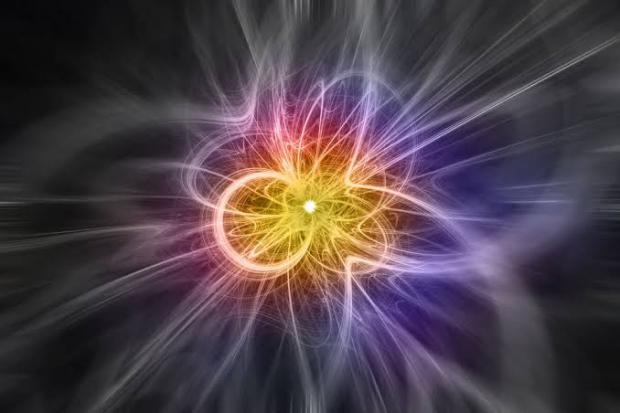
It is a positron, a particle almost identical to the electron. The difference is its electric charge: it is positive, whereas the electron's is negative. The positron is a particle of antimatter, whose charge is opposite to that of ordinary matter.
The problem is that a positron cannot be kept in a conventional box. When it comes into contact with an electron, the two particles disappear, releasing energy. To study it, it must therefore be prevented from touching the matter around it.
Physicists at Northwestern University in the United States have found a way to do this. They produced positrons from a radioactive substance, then slowed one down before placing it in a space almost devoid of air. Electric and magnetic fields keep it suspended, without contact with the walls.
The device is also extremely cold: its temperature is close to −273 °C, absolute zero. Under these conditions, the positron has very little energy. It can remain in its trap for months, long enough to be examined precisely.
The researchers then succeeded in controlling its energy. By sending it carefully tuned microwaves, they made it move from one state to another and detected these changes. This behavior follows the rules of quantum physics, which describes the smallest particles.
Why go to so much trouble for a single particle? Physicists want to compare the electron and the positron as precisely as possible. According to current theories, some of their properties, such as the strength of their magnetic behavior, should match perfectly—or almost—once their opposite charges are taken into account.
Such a comparison could help explain why our Universe contains mostly matter, whereas models of its early beginnings predict the creation of matter and antimatter in comparable quantities. But the decisive measurements have not yet been carried out: the team has mainly shown that it now possesses the necessary equipment.
No unexpected difference between the electron and its antiparticle has therefore been discovered at this stage. The achievement lies in having kept a positron isolated, extremely cold, and sufficiently well controlled to prepare experiments that were previously beyond reach.