










Breaking News
 Always Thirsty, Dizzy & Tired? It's Not More Water You Need
 What Makes The Best Jerky? The Bearded Butchers Compare!
 Iran War: Trump Sowed The Wind, And Is Reaping The Whirlwind
 "It's Coming And It's Serious..." - Martin Armstrong
Top Tech News
 I Built a Website to Expose Solar and Battery Scams
 Whistleblower Issues Dire Warning: Rogue AI, Hacking Nuclear Programs...
 Multi-material insulation delivers up to 10,000 x the stiffness
 Anduril's plan to save US sub edge from China's undersea surge
 Researchers Develop AI 'Mind-Reading' Tool That Reconstructs What Your Eyes See
 Video: Dexterous robot hand learns the delicate art of silk embroidery
 The computer that can read your mind:
 Seven apps. One craft
 SHOCK CASE REPORT: Advanced Alzheimer's Patient Regains Speech, Memory, Mobility...
 Most artificial limbs rely on silicone or plastic to mimic human hands.



Why Have Saudi Air Defenses Failed To Intercept Houthi Missiles?
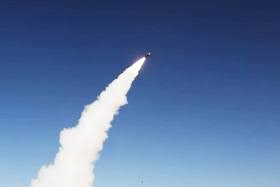
But repeated missile and drone strikes on Riyadh's main international airport have raised fresh questions about the limits of the kingdom's sophisticated air defenses.
Since October 6, the strikes have killed at least 20 people and injured almost 400. The deadliest attack so far happened on 10 October when 12 people were killed and more than 300 wounded.
On Monday, the kingdom vowed a "serious" response to the attacks and less than 24 hours later, Saudi strikes targeted energy facilities in Sanaa - causing massive fires and explosions that rocked the Yemeni capital.
So why have the latest Houthi attacks repeatedly penetrated Saudi defenses, and what do they reveal about the kingdom's ability to protect its most valuable assets?
Riyadh has spent billions of dollars on some of the world's most advanced air-defense systems, assembling an arsenal designed to counter precisely these threats. Its equipment includes the American-made MIM-104 Patriot, including the advanced PAC-3 variant with hit-to-kill technology, and the even more sophisticated Terminal High Altitude Area Defense (THAAD) system.
Both can intercept ballistic missiles and have demonstrated their capabilities in combat. Saudi Arabia also has a well-equipped air force, including advanced F-15s and Eurofighter Typhoons, capable of engaging drones and cruise missiles.
Yet Houthi missiles and drones have repeatedly evaded or penetrated the kingdom's defenses, exposing the difficulty of protecting a vast territory and its high-value targets from sustained attacks.
Nicholas Heras, interim executive director at the Middle East Policy Council and senior director at the New Lines Institute, said Saudi Arabia's vast territory leaves it "unusually exposed" to Houthi attacks launched from northern Yemen.
"Much of Saudi territory is desert, which makes it challenging to fully defend because of the distances that must be accounted for - and it costs more to have personnel maintain early warning systems in that terrain," Heras told Middle East Eye.
"The Houthis have a target-rich environment in Saudi Arabia that includes some of the most important oil infrastructure in the world that are more immediately exposed to the drone and missile attack capabilities that the Houthis possess."
Heras said the attacks on Riyadh were intended to send a message to Saudi Arabia amid renewed fighting in Yemen.
"The Houthis perceived a gap in Saudi capability and attention span and struck Riyadh to send a signal to Saudi Arabia that if Sanaa is hit, Riyadh will be hit," he said.