










Breaking News
 Democratic whiplash -- The Globalist Empire fights back
 The Great Betrayal
 Allison Inquiry UPDATE: The COVID Vaccine Loophole They NEVER WANTED YOU TO SEE!!!
 Republicans Unsure Why Voters Are Mad At Them As They Literally Haven't Done Anything These...
Top Tech News
 Prism puts an eye-controlled Linux computer on your face
 Remember Yesterday: AI For Today and Tomorrow
 Robot Mowers Invade America's Golf Courses, Putting Groundskeepers On Notice
 Monstrous 13-foot mecha craves the dangerous jobs humans avoid
 Scentronic tech lets you smell the internet
 Virgin Galactic's new rocket plane revives its bid for a space airline
 The metal kept moving east while the sellers ran, and Ronnie called the flush a week early
 Chinese Company Develops $1,000 AI-Powered Laser System To Kill Mosquitoes
 PRP vs Exosomes vs Stem Cells: Which Fits Your Condition?
 SHOCKING: The Secret (Frantzve) Family Business



Doug Casey on the Impact of War on Commodity Markets
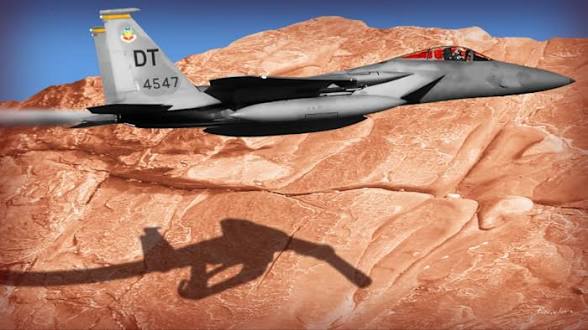
International Man: The world is in its most precarious geopolitical environment since World War 2.
Considering similar historical periods, what have been the most important investment implications of global conflict between the world's biggest powers?
Doug Casey: The big question is whether or not WW3 will go nuclear. And if it does, will it be just some relatively small-yield tactical bombs used against military formations? Or will it get out of control, with strategic weapons used against cities? Either is possible.
Let's just hope NATO doesn't back the Russians into a corner, the Zelensky regime stays out of NATO, and the Israelis don't go nuclear against the Iranians.
As WW3 develops, I don't think there's any question it will have significant cyber aspects as well. The whole world runs on computers. Computers control utilities, transport, the banking system, communications, commerce, distribution, and everything else. If computer networks are massively hacked it could collapse civilization. The result could be mass starvation after a couple of weeks.
And, of course, there's a real possibility of biological warfare. If any of these things happen, it increases the odds of all of them happening.
So price movements in the commodity and financial markets will likely be the least of our problems. Let's assume, therefore, that things don't go beyond a regional level.