










Breaking News
 Yes, Donald Trump Really Did Just Say That "An Economic Depression...
 Israel Imposes 'Muslim Ban' For Pilots & Crew In Wake Of FlyDubai Hijacking
 Saudi Aramco Headquarters In Dhahran Struck By Houthi Missile
 Can Elon Musk Rescue Republicans In November?
Top Tech News
 Anduril's plan to save US sub edge from China's undersea surge
 Researchers Develop AI 'Mind-Reading' Tool That Reconstructs What Your Eyes See
 Video: Dexterous robot hand learns the delicate art of silk embroidery
 The computer that can read your mind:
 Seven apps. One craft
 SHOCK CASE REPORT: Advanced Alzheimer's Patient Regains Speech, Memory, Mobility...
 Most artificial limbs rely on silicone or plastic to mimic human hands.
 Flying cell tower beams phone signal to Japan from 10 miles up
 Chinese Commercial Reactor Achieves Nuclear Fusion with Clean Hydrogen-Boron Fuel
 Palmer Luckey: Autonomous Weapons Are Ancient and Why Anduril Won't Build Humanoids | EP #295



Rolling Blackouts Are Coming: Why I'm Going Off-Grid Before 2029
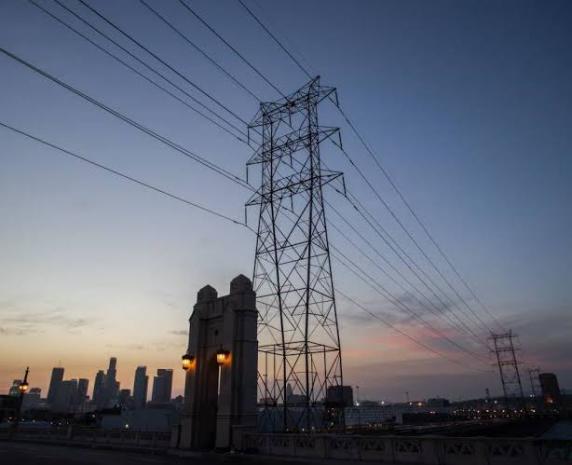
Publisher Note: ( 2029 ??? Better get on it Now! )
I'm going to state this as plainly as I can: by 2029, high-frequency rolling blackouts will be a normal part of American life. Not a rare emergency. Normal. The three major interconnections that keep this country running — the Eastern PJM grid, the Western grid, and the Texas grid — are all straining under load, and none of them are being fundamentally fixed. I've watched grid operator PJM warn that spare generation capacity on its network will plummet to just 14% by 2027, far below the 20% safety margin needed to prevent rolling blackouts [1]. That's not a forecast from a doomer, either. That's the operator's own math.
The trigger for the next phase of this crisis will be data centers. Under pressure from the Pentagon and the White House — which now frame the AI race against China as a national security emergency — grid operators will designate AI data centers as national security assets and give them power preference over ordinary households. I've already documented a preview of this: the Department of Energy issued an emergency order allowing the Southwest Power Pool to draw power from emergency backup generators, including those at technology data centers, to prevent rolling blackouts across the central United States [2].
Once that legal and operational precedent is set, ordinary residents become low-priority load. When capacity runs short, you get blacked out while the machines keep running. This is not speculation on my part — it's the logical endpoint of a system that keeps approving massive new loads while ignoring the fact that the grid cannot carry them. That's why the blackouts are coming. The only real question is whether you'll be ready.
The Grid Is Failing — and Data Centers Will Get Priority
Look at the numbers. PJM Interconnection serves 13 states and roughly 76 million people across the mid-Atlantic and Midwest, and its capacity margins are shrinking year after year. In its most recent capacity auction, PJM procured 149,182 MW of supply — still 6.8 gigawatts below the level required to meet its one-event-in-10-year reliability standard, marking the third straight year the operator failed to reach its own requirement [3]. The shortfall was driven, in PJM's own words, by surging data center demand.
The Texas grid nearly collapsed in 2021, and now it faces a flood of data center interconnection requests that the state grid was never designed to absorb. New York is running rolling blackouts because its Climate Leadership and Community Protection Act effectively prohibits construction of new fossil fuel power plants, while the old ones are aging and forbidden to be replaced or upgraded [4]. Meanwhile, PJM is already warning that by June of 2027, it will run out of emergency peak power — Goldman Sachs projections put spare generation capacity on the Eastern grid below the safety threshold needed to prevent blackouts [1]. The pattern repeats everywhere: demand is rising, supply is capped, and the political class has no plan.