










Breaking News
 The 30-mile torrent of destruction: Unstoppable floods triggered by falling 2,000ft chunk...
 Zelensky Continues To Oppose Wartime Democracy Amidst Escalated Election Demands
 CIA Director Held Covert Moscow Talks With Russian Intel Chiefs As Relations Sink Deeper...
 Meta Settles With US States For $16.7 Billion Over Social Media Harms To Children
Top Tech News
 Singapore is experimenting with biological computing using living human neurons...
 It's Happening - Europe is Building an Impossible Fusion Reactor
 Portable 1MW Kaleidos Microreactor Secures Critical Nuclear Fuel Deal Through 2030s
 This New All-In-One Range Extender Is Ready To Go Into Any Electric Truck
 Aptera Reveals The Secret To Building Its Solar EV: China
 High-voltage sodium home battery emerges as affordable rooftop solar solution
 Peter Thiel-Funded Company Anduril to Triple the Number of Autonomous Surveillance...
 China has released Origin Pilot, claimed to be the world's first open-source operating system...
 ShieldAI XBAT Drone Fighters Can Give A Fighter Drone Wing to Every US Destroyer
 Brain organoids, kept alive more than five years, matured like human brains



Polestar Still Has No Idea Why The U.S. Kicked It Out
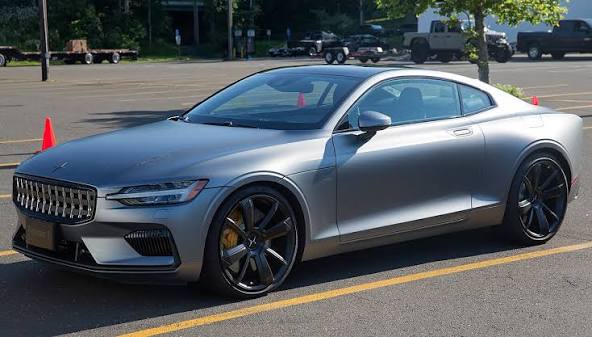
Polestar has yet to get an explanation from the U.S. Department of Commerce for its decision to effectively force the automaker out of the American car market. The government denied the automaker, which is owned by China's Geely Group, authorization to sell cars in the U.S. for model year 2027 onward. Its corporate cousin, Volvo, was granted a special authorization to continue selling its cars in the U.S.
In a letter sent to dealers and viewed by The Wall Street Journal (paywall), Polestar said it has yet to hear back from the Trump administration on why it must stop selling EVs in America. The automaker argued that its Polestar 3 electric SUV is mechanically identical to the Volvo EX90, and that both are assembled on the same production line at the Volvo Cars plant in Ridgeville, South Carolina.
At the core of all this is the Connected Vehicle rule, which restricts vehicles linked to hardware or software from foreign adversaries such as China and Russia from being sold in the U.S. The rule was finalized by the Biden administration and argues that vehicles connected to Chinese technology, including telematics and advanced driver assistance systems, could pose a national security risk or potentially be used to spy on Americans.
"In essence, we are currently focusing on getting the attention of (the Commerce Department) to obtain the requested information and to understand the underlying basis for the denial," Peter Wexler, Polestar's U.S. head of government affairs, said in the letter viewed by The WSJ. He added that the Volvo EX90 was "a car that is essentially the same as the Polestar 3 and that uses the same software stack."
The saga took a bizarre twist earlier this month when a New Jersey Polestar dealer filed a lawsuit against the Swedish automaker, claiming that it was planning its U.S. exit for two years and used the government ruling as a cover up. The dealership, Prestige Imports, said Polestar violated New Jersey's Franchise Practices Act, which generally prohibits automakers from terminating a franchise without at least 60 days advance written notice and good cause.
Sweden's Minister for Foreign Trade Benjamin Dousa said that he worked very closely with Volvo to make sure it met the Connected Vehicle Rule requirements to continue selling cars in the U.S., but Polestar didn't ask for the same help, per Automotive News.