










Breaking News
 The 30-mile torrent of destruction: Unstoppable floods triggered by falling 2,000ft chunk...
 Zelensky Continues To Oppose Wartime Democracy Amidst Escalated Election Demands
 CIA Director Held Covert Moscow Talks With Russian Intel Chiefs As Relations Sink Deeper...
 Meta Settles With US States For $16.7 Billion Over Social Media Harms To Children
Top Tech News
 Singapore is experimenting with biological computing using living human neurons...
 It's Happening - Europe is Building an Impossible Fusion Reactor
 Portable 1MW Kaleidos Microreactor Secures Critical Nuclear Fuel Deal Through 2030s
 This New All-In-One Range Extender Is Ready To Go Into Any Electric Truck
 Aptera Reveals The Secret To Building Its Solar EV: China
 High-voltage sodium home battery emerges as affordable rooftop solar solution
 Peter Thiel-Funded Company Anduril to Triple the Number of Autonomous Surveillance...
 China has released Origin Pilot, claimed to be the world's first open-source operating system...
 ShieldAI XBAT Drone Fighters Can Give A Fighter Drone Wing to Every US Destroyer
 Brain organoids, kept alive more than five years, matured like human brains



Bessent's bond gambit echoes Japan's decades-long debt trap
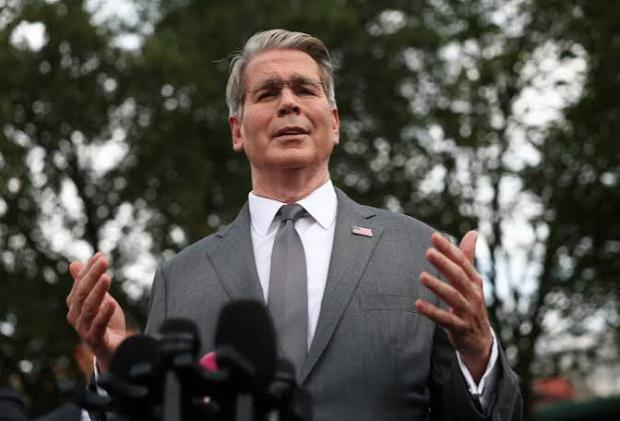
The moment the US debt crossed US$40 trillion, it stopped being a number and became a gravitational force — one powerful enough to bend Asia's bond markets, currencies and policy priorities.
Officials in Tokyo know this better than anyone. After decades of wrestling with its own debt?heavy equilibrium, Japan offers a preview of what happens when a government's borrowing needs start steering global capital flows rather than the other way around.
It's one thing for this dynamic to be afoot in Asia's No. 2 economy. It's quite another when we're talking about the globe's biggest — and the protector of the reserve currency.
The irony, of course, is that central banks and investors spent the first half of 2026 piling into dollars as a safe haven amid the Iran war. Despite the US having started the conflict along with Israel in late February, global funds raced into hyper-liquid US Treasuries.
Yet cracks are appearing fast since headlines earlier this month of the $40 trillion milestone. Last week, US 30-year Treasury yields rose to their highest level since 2007 at 5.3%. That prompted Treasury Secretary Scott Bessent's team to declare war, essentially, on bond bears.
Bessent rolled out a Treasury debt buyback program to cap surging yields. Though Bessent's "twist" gambit is ostensibly modeled after the policies of Nobel laureate James Tobin during the John F. Kennedy administration in the 1960s, it has serious Japanese echoes — and not good ones.
The narrative quickly shifted from Bessent bending markets to Trump World's will to the "bond vigilantes" handing the US Treasury its comeuppance. Famed investor Stanley Druckenmiller took to the Wall Street Journal to slam Bessent's gamble. "Governments defending prices against fundamentals always lose," he warned.
Here, Japan is Exhibit A. Since the late 1990s, one government and Bank of Japan team after another has declared war on bond bears. By 1999, the effort had the BOJ slashing official rates to zero. Next, Tokyo pioneered quantitative easing in 2001. Since then, Japan has unleashed countless financial sorties to battle investors bidding bond yields higher.
In 2013, the BOJ supersized its balance sheet. Over the next five years, it gorged on Japanese government bonds (JGBs) and stocks until its balance sheet topped the nation's $4.2 trillion economy.
During that period, in 2016, the BOJ experimented with yield-curve-control (YCC) tactics. It also introduced quantitative and qualitative monetary easing (QQE) and intensified its negative interest rate policy (NIRP) to keep JGB yields under wraps.