










Breaking News
 The 30-mile torrent of destruction: Unstoppable floods triggered by falling 2,000ft chunk...
 Zelensky Continues To Oppose Wartime Democracy Amidst Escalated Election Demands
 CIA Director Held Covert Moscow Talks With Russian Intel Chiefs As Relations Sink Deeper...
 Meta Settles With US States For $16.7 Billion Over Social Media Harms To Children
Top Tech News
 Singapore is experimenting with biological computing using living human neurons...
 It's Happening - Europe is Building an Impossible Fusion Reactor
 Portable 1MW Kaleidos Microreactor Secures Critical Nuclear Fuel Deal Through 2030s
 This New All-In-One Range Extender Is Ready To Go Into Any Electric Truck
 Aptera Reveals The Secret To Building Its Solar EV: China
 High-voltage sodium home battery emerges as affordable rooftop solar solution
 Peter Thiel-Funded Company Anduril to Triple the Number of Autonomous Surveillance...
 China has released Origin Pilot, claimed to be the world's first open-source operating system...
 ShieldAI XBAT Drone Fighters Can Give A Fighter Drone Wing to Every US Destroyer
 Brain organoids, kept alive more than five years, matured like human brains



Here's why the FDA hit frozen blueberries with its highest risk warning
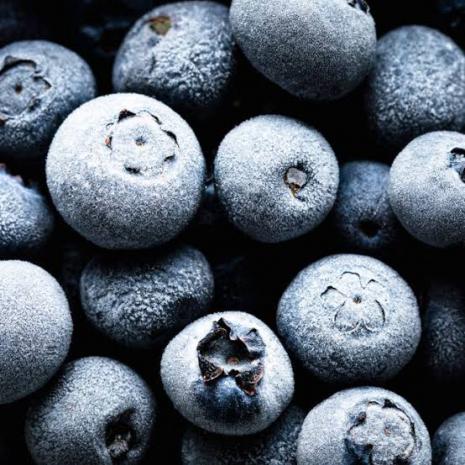
Why it matters: That's the highest level category the agency uses — a sign that Americans should remain on high alert for berries tied to the mysterious outbreak.
The big picture: The classification shows how a recall can become more serious after a retailer or supplier has already pulled products as the FDA completes a wider risk assessment.
Recalls have become more common in recent weeks, affecting eye drops, tomato soup, eggs, alfalfa sprouts and more common grocery store items.
Driving the news: The FDA has been investigating specific frozen blueberries and mixed berries as being at risk for potential E. coli contamination.
The product was distributed to at least eight states.
But earlier this week, the FDA announced a Class I recall due to "reasonable probability" that they could cause serious harm or death.
How FDA risk levels work
The FDA has three risk recall classifications across both food and drugs:
Class I — High risk: The highest risk level is usually reserved for when the FDA concludes there is a reasonable probability that people could get very sick or die from the contamination, like with Salmonella or E. coli.
Class II — Medium risk: The second class of risks is often associated with contamination that can cause temporary or reversible health effects, like an undeclared allergen.
Class III — Low risk: The lowest class is often reserved for exposure to items that won't cause adverse health effects, like a labeling violation.
How the blueberry recall became high risk
Generally, the FDA will issue the Class I classification after the agency completes a risk assessment of the recalled product.
The classification "should not be seen as an expansion or change to a firm's voluntary public warning," per the FDA.
Catch up quick: At the end of June, Publix stores stopped selling GreenWise frozen berries due to concerns that the berries may have been causing E. coli illnesses.
On July 3, the supplier recalled one batch of blueberries when only 12 illnesses and four hospitalizations had been reported.
Later that month, Publix expanded the recall. The FDA put the berries on an import alert, noting the concern, too.
On Aug. 18, the FDA shared the Class I warning.
Questions about FDA food tracking
The FDA's blueberry risk classification shows food-safety risks escalating as surveillance has narrowed.
State of play: Under Health Secretary Robert Kennedy, the Foodborne Diseases Active Surveillance Network (FoodNet), which tracks foodborne illnesses at large, was narrowed to follow salmonella and STEC (Shiga toxin-producing E. coli).