










Breaking News
 20 Freezer Tricks That Make Your Groceries Last 10x Longer
 Grow Food Fast, Self Watering Adapters for Mason Jars
 One Copper and Zinc In Water Purify Everything -- The $48 Billion Industry That Needs You To Forget
 Nuclear Fusion is Closer Than You Think - THIS Is Why
Top Tech News
 Portable 1MW Kaleidos Microreactor Secures Critical Nuclear Fuel Deal Through 2030s
 This New All-In-One Range Extender Is Ready To Go Into Any Electric Truck
 Aptera Reveals The Secret To Building Its Solar EV: China
 High-voltage sodium home battery emerges as affordable rooftop solar solution
 Peter Thiel-Funded Company Anduril to Triple the Number of Autonomous Surveillance...
 China has released Origin Pilot, claimed to be the world's first open-source operating system...
 ShieldAI XBAT Drone Fighters Can Give A Fighter Drone Wing to Every US Destroyer
 Brain organoids, kept alive more than five years, matured like human brains
 Parkinson's patient's tremors VANISH within minutes of GROUNDBREAKING treatment
 NEW HOMES ARE BUILT WITH THIS AND IT'S MAKING YOU SICK


"I Hope It Gives A Really Good Lesson Going Forward": 'Pollster' Prakash's Lic
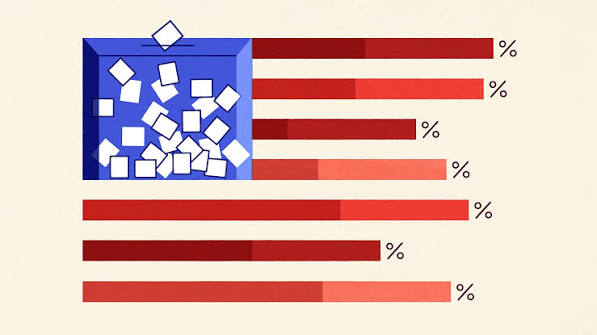
The other thing we know is that he will likely get away with spreading fake polling results. Lies can be protected speech under the First Amendment and, while Prakash would not likely want to take a popularity poll, he is unlikely to face legal consequences for his "short-term social experiment."
We still do not know much about the twenty-one-year-old college graduate who reportedly admitted to releasing fake polling in the last election cycle.
What we do know is that he succeeded and such polls can influence critical campaign decisions. For example, his poll put the Democratic Socialist up by 23 points in Wisconsin and she surprised many by spending the final days campaigning in rural areas where she was expected to do worse. (She would lose by less than one percent of the vote). It is unclear where, had Hong known how close the race was, she would have spent the final days in higher-yield urban districts.
The story laid bare the vulnerability of modern polling, which was again wildly wrong in predictions in various races during the primaries. However, it also highlights a novel question of potential liability for knowingly spreading falsehoods. In this case, Prakash wanted the lie to spread and likely succeeded beyond his wildest imagination.
He told The Guardian that "I wanted to see if fake polls could really penetrate the ecosystem that easily. And as it turned out, it could." He created a website called Median Strategies and released fake polls in Democrat primaries in the Wisconsin governor's race, the Los Angeles mayoral race, and two statewide Nevada races. The polls were quickly picked up and spread throughout the "ecosystem."
He explained to the Guardian how easy it was: "I think my overall takeaway was that if you just make it look a bit pretty, it's rather easy for it to spread."
We do not know if Prakash had a political motive in showing certain candidates dominating in certain races.
He reportedly denied using his fake polls to play betting sites as part of the prediction market. He also denied being compensated or directed by any campaign to run the hoax.
That matters because using lies for financial gain can be a form of fraud. However, just being a liar is protected.
In United States v. Alvarez, the Supreme Court struck down the Stolen Valor Act and held 6-3 that it is unconstitutional to criminalize lies.
The case shows the dividing line. Xavier Alvarez was protected in claiming to have won the Congressional Medal of Honor as well as marrying a Mexican movie star, playing for the Detroit Red Wings, and rescuing the ambassador in the Iranian hostage crisis. However, if he had used those claims to receive veteran benefits or donations, he could have been prosecuted.