










Breaking News
 Palmer Luckey: Autonomous Weapons Are Ancient and Why Anduril Won't Build Humanoids | EP #295
 "Autonomous warfare command, or autowarcon - a new 4 star combatant command...
 The CIA knew anti-parasitics DISRUPT CANCER GROWTH in the 1950s...
For America to Survive: We Need One Language, English!
Top Tech News
 A laser just photographed objects through six feet of concrete
 Elon Musk's Next-Gen Motor Destroy Entire EV Industry
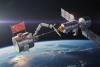 China's disputed satellite refueling heralds new space war era
 BYD Will Put Solid-State Batteries In An EV Next Year: Executive
 FDA-cleared exoskeleton puts spinal-cord patients back on their feet
 Your Robotic Vacuum Is Watching You -- Could It Someday Testify Against You in Court?
 Why Unigrid's Sodium-Ion Batteries Are the Game-Changer for Off-Grid Energy Storage
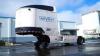 This Battery On Wheels Makes Any Diesel Truck Electric In 5 Minutes
 Mass-Production of AI Infrastructure – Speed Up by 10X
 3D-printed Martian mud homes look critical for life beyond Earth



Can Wildfire Smoke Affect Your Cells?
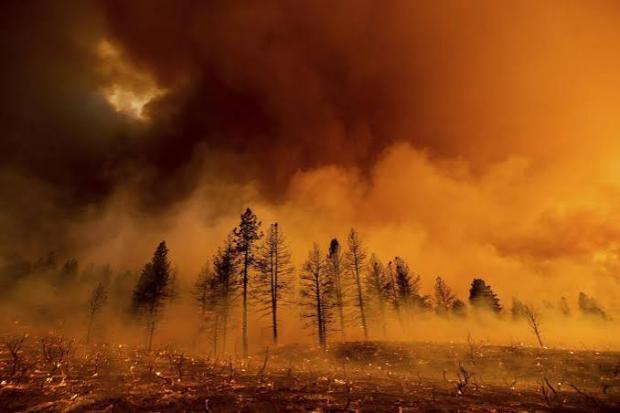
We've all seen the major fires in Spain and France. Prolonged heat, drought, and strong winds are complicating matters. Spain continues to battle several significant wildfires in Leon, Zamora and Castellon. Some fires have stabilized enough for residents to begin returning, while other fires continue to remain active.
France is experiencing one of its largest wildfire emergencies on record. Southern France is affected, include Gironde, Var/Provence, and the Bordeaux region. In the Gironde fire alone, 220,000 evacuations have occurred. Thousands of firefighters are deployed. Some fires have been largely contained, but others have reignited due to hot, dry, and windy conditions.
Greece is a very high-risk wildfire zone. Large fires burn near Athens. Homes, forests, and farmland have been destroyed, as strong winds continue to hamper firefighting efforts. During those efforts, two firefighting helicopters collided, killing two crew members during suppression operations.
Canada's 2026 wildfire season is very active, with fires across the boreal forest ongoing in areas like Manitoba and Saskatchewan. Canadian authorities continue to monitor and respond to new fire starts as hot, dry conditions persist in parts of the country.
Washington State is experiencing one of its most severe wildfire periods in history. The fires are fueled by extreme heat, prolonged drought, low humidity, and strong winds, particularly across the eastern part of the state. The area near Spokane is hardest hit, with multiple large fires having already burned over 250,000 acres. Over 700 buildings have burned and over 65,000 people have been forced to evacuate.
Why are so many fires occurring?
Human causes are being investigated. Authorities are investigating whether faulty power infrastructure contributed to the fires, and arson after multiple ignition points were discovered. In Washington, fires may have gotten out of control in one of its many homeless camps. In all cases, prolonged heat waves, severe drought, low humidity, and strong winds complicate the matter. Dry vegetation is acting as abundant fuel to feed these fires.
The Smoke!
Smoke continues to affect air quality both locally and in neighboring regions. Folks in Michigan, Ohio and other border states experienced major smoke from the Canadian wildfires.
Wildfire smoke is not just wood smoke. Instead, it is a complex mixture of gases and microscopic particles produced when vegetation, buildings, vehicles, and other materials burn. The composition of the smoke depends on what is burning, the temperature of the fire, weather conditions, and how long the smoke remains in the atmosphere.
Just think about all the glyphosate sprayed on those forests. Now it is burning.