










Breaking News
 Maybe The Real Story In Michigan Isn't Left vs. Right
 Martin Armstrong: Why The World Order Will Collapse in 2032 | Gold, Oil & The US Dollar
 Very important move in the miners today.
 JUST IN: The Stock Market is approaching a major top and a possible 1987-like crash...
Top Tech News
 Voyager 1 approaches one light day from Earth
 Visual Implants
 Renewable Energy Breakthrough! World's Most Efficient Tesla Turbine System
 I Told You So
 Meet Sunbird, a nuclear fusion-powered space tug concept from Pulsar Fusion.
 China and Russia launch 29-nation AI alliance to rival western control of technology
 BREAKING: China has begun manufacturing domestically developed Immersion Deep...
 Idaho's High Desert Becomes Hot Spot For Nuclear Power Revolution
 The World's Largest Electric Aircraft Is About to Take Its First Flight
 Tesla Cybercabs and Superchargers Will Act as Mini Cell Towers for SpaceX Starlink



The Property Rights Duality and the Defense of Freedom
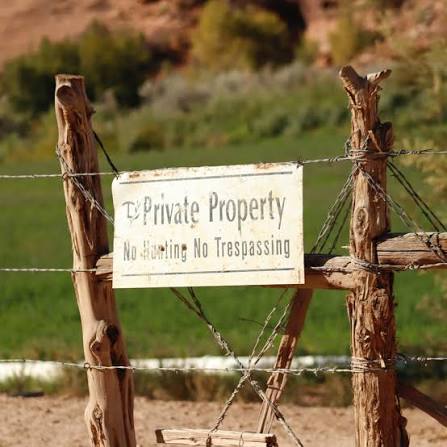
This is possible because the modern state is associated with the advent of the rule of law. To understand why society remains so blind to the ever-expanding "legal spoliation" by the state (to use Bastiat's expression), it is necessary to look at the inherent duality between the psychological universality of property and its messy historical reality.
As Rothbard and others have noted, there is an instinctive sense of self-ownership of one's own body, which led even die-hard communists to implicitly recognize private property. Human beings naturally feel they "own" something they have built or created, and they feel wronged when something they "possess" is taken from them without their consent. Such universal feelings led long ago to precepts such as the Decalogue and the development of the concepts of natural rights. Empirical evidence confirms these instincts even in toddlers and small children.
Yet, it is important to remember that property rights were never a given. In other words, human society has often been run according to the "principle" that "might makes right," and efforts towards establishing rule of law have never been completely successful. As Ludwig von Mises wrote in Human Action:
Private property is a human device. It is not sacred. It came into existence in early ages of history, when people with their own power and by their own authority appropriated to themselves what had previously not been anybody's property. Again and again proprietors were robbed of their property by expropriation. The history of private property can be traced back to a point at which it originated out of acts which were certainly not legal. Virtually every owner is the direct or indirect legal successor of people who acquired ownership either by arbitrary appropriation of ownerless things or by violent spoliation of their predecessor.
In other words, though there is an innate instinct of property rights in humans, throughout history this instinct has gone constantly and naturally unheeded. "Homo homini lupus,"as the saying goes. Even in societies in which property rights were recognized, these rights have often been honored in the breach. Incidentally, the state was more easily able to become the prime violator of property rights as private property violations declined.
There is thus a duality inherent in the advent of property rights: on the one hand, the psychological universality of property instincts in the human being, and on the other hand the historical reality of constant property right violations. The history of the uneven development of liberty can be seen through this lens; freedom progresses during periods when society recognizes the importance of respecting property rights, for the benefit of all.