










Breaking News
 Maybe The Real Story In Michigan Isn't Left vs. Right
 Martin Armstrong: Why The World Order Will Collapse in 2032 | Gold, Oil & The US Dollar
 Very important move in the miners today.
 JUST IN: The Stock Market is approaching a major top and a possible 1987-like crash...
Top Tech News
 Voyager 1 approaches one light day from Earth
 Visual Implants
 Renewable Energy Breakthrough! World's Most Efficient Tesla Turbine System
 I Told You So
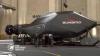 Meet Sunbird, a nuclear fusion-powered space tug concept from Pulsar Fusion.
 China and Russia launch 29-nation AI alliance to rival western control of technology
 BREAKING: China has begun manufacturing domestically developed Immersion Deep...
 Idaho's High Desert Becomes Hot Spot For Nuclear Power Revolution
 The World's Largest Electric Aircraft Is About to Take Its First Flight
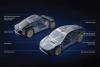 Tesla Cybercabs and Superchargers Will Act as Mini Cell Towers for SpaceX Starlink



Japan Looks To Palantir For Battlefield AI

Under the proposal, multiple U.S.-developed AI platforms would support commanders by processing battlefield data, assisting with tactical decisions, and coordinating operations across missions such as missile defense, counterstrikes, and drone deployments. The initiative is expected to be incorporated into revisions of Japan's national security strategy later this year as the government reshapes its defense posture over the next five years.
Among the technologies under consideration are Palantir's Maven Smart System, which analyzes intelligence and recommends targets and tactics, and Anduril's Lattice AI, which fuses information from sensors into a single operational picture while enabling autonomous coordination of drones and other assets in contested environments.
Nikkei reports that Japan currently lacks AI-enabled command systems, but officials see the technology as essential for keeping pace with increasingly data-intensive and fast-moving military operations. As cooperation with U.S. forces deepens, particularly following the launch of the Joint Operations Command in 2025, narrowing the gap in decision-making speed has become a growing priority.
At the same time, Tokyo is seeking to avoid long-term dependence on foreign technology. One proposal would place a Japanese-developed AI layer above the U.S. systems to determine which model is best suited for a given task. Sakana AI's Fugu, designed to orchestrate multiple AI models, has emerged as a leading option for this role and already works with Japan's Defense Ministry.
The government also plans to host the supporting data infrastructure within Japan to better protect sensitive military information. Even so, officials acknowledge that maintaining compatibility with U.S. AI platforms will be critical, creating a balance between rapidly adopting proven foreign technology and preserving the flexibility to transition to domestic AI capabilities in the future.