










Breaking News
 Yes, Donald Trump Really Did Just Say That "An Economic Depression...
 Israel Imposes 'Muslim Ban' For Pilots & Crew In Wake Of FlyDubai Hijacking
 Saudi Aramco Headquarters In Dhahran Struck By Houthi Missile
 Can Elon Musk Rescue Republicans In November?
Top Tech News
 Anduril's plan to save US sub edge from China's undersea surge
 Researchers Develop AI 'Mind-Reading' Tool That Reconstructs What Your Eyes See
 Video: Dexterous robot hand learns the delicate art of silk embroidery
 The computer that can read your mind:
 Seven apps. One craft
 SHOCK CASE REPORT: Advanced Alzheimer's Patient Regains Speech, Memory, Mobility...
 Most artificial limbs rely on silicone or plastic to mimic human hands.
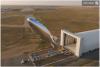 Flying cell tower beams phone signal to Japan from 10 miles up
 Chinese Commercial Reactor Achieves Nuclear Fusion with Clean Hydrogen-Boron Fuel
 Palmer Luckey: Autonomous Weapons Are Ancient and Why Anduril Won't Build Humanoids | EP #295



General Atomics pushes ahead with self-fueling nuclear fusion tech tests
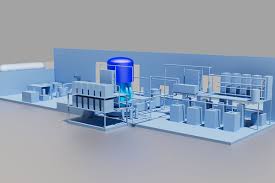
Though it always seems to be 25 years away no matter what calendar you look at, the potential payoff of a practical fusion reactor is so earth-shattering that there is tremendous incentive to pursue the technology. The thing is, the problem isn't just creating a nuclear fusion reaction – any halfway decent physics lab can do that on a benchtop. The real trick is to build a commercial reactor that is net-energy positive and practical.
Aside from coming up with a reactor design that can steadily produce more energy than it consumes, fusion reactors must be able to turn that energy into power. They must also withstand the immense stresses produced by powerful magnetic fields, extreme heat, and the intense neutron radiation caused by the fusion process.