










Breaking News
 The Most Splendid Housing Bubbles In America
 Fidelity, Vanguard Halt Donations To SPLC After Federal Indictment
 It's all coming to an end...
 Ex-CIA Agent John Kiriakou on the Biggest Iran Lie
Top Tech News
 Researcher wins 1 bitcoin bounty for 'largest quantum attack' on underlying tech
 Interceptor-Drone Arms-Race Emerges
 A startup called Inversion has introduced Arc, a space-based vehicle...
 Mining companies are using cosmic rays to find critical minerals
 They regrew a severed nerve - by shortening a bone.
 New Robot Ants Work Like Real Insects To Build And Dismantle On Their Own
 Russian scientists 'are developing the world's first drug to delay ageing' months after
 Sam Altman's World ID Expands Biometric Identity Checks
 China Tests Directed Energy Beam That Recharges Drones Mid-Flight
 Jurassic Park might arrive sooner than expected, just with Dinobots.



Turkey is Iran war's biggest winner -- without firing a shot
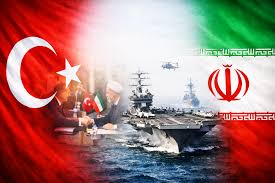
When US and Israeli aircraft struck Iran on February 28, killing Supreme Leader Ali Khamenei and decapitating much of the senior Iranian leadership, Turkey's reaction was striking for what it withheld.
President Recep Tayyip Erdogan described the US-Israeli attacks on Iran as a blatant violation of international law, closed Turkish airspace to US forces and personally conveyed his condolences following the assassination of Khamenei.
At the same time, Ankara took care to distance itself from Tehran, openly criticizing Iran's retaliatory strikes on Gulf states and blaming Iranian intransigence for the collapse of pre-war negotiations. The message was deliberate, and it has aged well: Turkey was against the war and was no one's ally in it.
That posture, what Turkish officials privately describe as "active neutrality", is now paying compounding strategic dividends. Two months in, with a Pakistani-mediated ceasefire fragile but holding since early April, the most consequential second-order effect of the war may be the elevation of Turkey to a regional position it has not enjoyed in modern times.
The mediator's purse
Begin with the most visible gain: diplomatic centrality. The quartet of Turkey, Saudi Arabia, Egypt and Pakistan that convened in Islamabad on March 29 to coordinate de-escalation is, in substance, a Turkish-driven format.
Reuters reported on March 25 that Ankara had been a go-between for messages between Iran and the US, probing US positions while warning Tehran against widening the war. European Commission President Ursula von der Leyen publicly endorsed Turkey's mediation efforts on March 1, and the personal rapport between Erdogan and Donald Trump, whatever its limits, has lent the role a credibility that Doha or Muscat alone cannot match.
Mediation matters not because Ankara expects to broker a comprehensive settlement (it does not) but because the role itself confers what diplomats call right of access: a permanent seat in the conversations that will shape whatever post-war regional order emerges.
A vacuum at Iran's expense
The deeper structural shift is geographic. For four decades, Iran functioned as the institutional anchor of a "resistance" axis running through Iraq, Syria, Lebanon and the Gulf. Israel's gradual dismantling of that network from 2023 onward, capped now by the joint US-Israeli decapitation strikes, has eviscerated it.
Combined with Russia's weakened position after years of attrition in Ukraine and Iran's degradation, the Russia-Turkey-Iran triangle that governed Syrian diplomacy through the Astana process has effectively collapsed, leaving Turkey as the sole functional broker in that format, a significant elevation of Ankara's diplomatic weight that extends well beyond Syria.