










Breaking News
 Iran Announces Fuel Rationing As Brent Sets New War Highs, After Trump Rejects Tehran's Latest O
 BREAKING: James Comey Under Arrest – Surrenders to Law Enforcement at Federal Courthouse...
 Founding Felons: Jefferson Would Be on a Watch List Today--You Might Be Next
 If Science Is a Public Good, Let China Pay for It
Top Tech News
 Researcher wins 1 bitcoin bounty for 'largest quantum attack' on underlying tech
 Interceptor-Drone Arms-Race Emerges
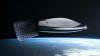 A startup called Inversion has introduced Arc, a space-based vehicle...
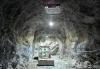 Mining companies are using cosmic rays to find critical minerals
 They regrew a severed nerve - by shortening a bone.
 New Robot Ants Work Like Real Insects To Build And Dismantle On Their Own
 Russian scientists 'are developing the world's first drug to delay ageing' months after
 Sam Altman's World ID Expands Biometric Identity Checks
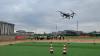 China Tests Directed Energy Beam That Recharges Drones Mid-Flight
 Jurassic Park might arrive sooner than expected, just with Dinobots.



'Metajets' could allow future spaceships to be propelled by nothing but light
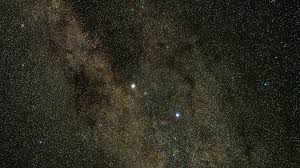
According to a press release, researchers at Texas A&M University have developed a technology that could one day reduce delivery to a mere 20 years using nothing but light for propulsion.
In their research, published in Newton, the team successfully lifted and steered tiny devices in multiple directions using nothing but light – no fuel, motors, or physical contact. While the immediate experiment involved microscopic structures rather than spacecraft, the researchers argue that the same underlying physics may one day contribute to advanced propulsion systems that could dramatically reduce travel times across space.
Now, the concept of light propulsion is not new. Scientists have understood for more than a century that light exerts pressure, a phenomenon often called radiation pressure. That principle has already been demonstrated in several forms. In one of many examples, NASA and JAXA have both flown solar sail spacecraft that use sunlight for gentle but continuous thrust.
However, one of the major challenges in light propulsion has been controlling the generated motion. Pushing an object forward is one thing; keeping it stable, steering it accurately, and allowing it to maneuver in multiple directions is another. This becomes especially important for future light sails traveling at extreme speeds, where even tiny instabilities could send a craft, originally on its way to Mercury, straight to Jupiter.
At the center of the concept are tiny devices called metajets, made from metasurfaces: ultrathin materials patterned with nanoscale structures that can precisely redirect incoming light. When a laser beam hits the surface, the patterned features bend or scatter the light in specific directions. Because light carries momentum, changing its direction creates an equal and opposite reaction force on the object itself. In simple terms, the light pushes the device as it is redirected.
What makes the system notable is that the movement is built into the material design rather than the laser beam alone. By carefully arranging the nanoscale patterns across the metasurface, researchers can generate forces in multiple directions simultaneously. This allows the metajets to move sideways, rise upward, or travel forward, giving them full three-dimensional maneuverability.
In tests, laser illumination caused the prototypes to levitate and propel laterally simultaneously. This demonstrates a level of optical control beyond traditional light-manipulation systems, which often only trap or push objects in one direction.
The significance of the experiment is less about immediate applications and more about proving the principle that carefully engineered surfaces can convert laser energy into directed, programmable force. If that principle scales as expected, it could open the door to systems ranging from microscopic robots to much larger light-driven vehicles.
That is where the discussion turns to travel time. The nearest star system, Alpha Centauri, lies about 4.37 light-years away. Conventional rocket-powered spacecraft travel far too slowly for such journeys to be practical. At the speeds of today's deep-space probes, a trip would take tens of thousands of years. Laser propulsion concepts aim to change that by accelerating extremely lightweight craft to a significant fraction of the speed of light. If a probe could reach around 20% the speed of light, the journey could theoretically be reduced to roughly two decades instead of many millennia.