










Breaking News
 Tuesday War Room LIVE: FBI Raids Fraudulent Somali Daycare Centers In Minnesota...
 Is America a Racist Nation?
 WATCH -- Minneapolis: FBI Raids Childcare Facilities Linked to Somali Fraud
 US Navy's new robotic refueling drone completes first operational flight
Top Tech News
 Researcher wins 1 bitcoin bounty for 'largest quantum attack' on underlying tech
 Interceptor-Drone Arms-Race Emerges
 A startup called Inversion has introduced Arc, a space-based vehicle...
 Mining companies are using cosmic rays to find critical minerals
 They regrew a severed nerve - by shortening a bone.
 New Robot Ants Work Like Real Insects To Build And Dismantle On Their Own
 Russian scientists 'are developing the world's first drug to delay ageing' months after
 Sam Altman's World ID Expands Biometric Identity Checks
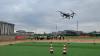 China Tests Directed Energy Beam That Recharges Drones Mid-Flight
 Jurassic Park might arrive sooner than expected, just with Dinobots.



Did A $1.5 Trillion Pin Just Pop The Entire AI Bubble?

They'll look like missed revenue targets, nervous lenders, delayed data center deals, and executives suddenly discovering cost discipline after years of promising limitless demand.
In other words, the bubble doesn't have to burst all at once. It can begin with the quiet realization that the entire AI trade, from chips to hyperscalers to private credit, power, data centers, and even the S&P 500 itself, has been priced for a spending cycle that may no longer be financeable.
If you want a framework for recognizing those signs in real time, it's worth going back to what Michael Burry said late last year.
And based on new revelations, those signs and realizations may have started showing up over the last 24 hours. In other words: it's officially time to pay attention.
In my piece that I wrote in December 2025, Michael Burry wasn't dismissing AI. He was describing the structure forming around it—and why that structure should feel familiar. In his view, what we're watching doesn't resemble a classic product bubble so much as an infrastructure one. As he put it, the dot-com era wasn't really about websites, it was a massive buildout of fiber, routers, and transmission capacity that overshot demand.
"This bubble looks an awful lot like the dot-com bubble… it wasn't really a dot-com bubble—it was a data transmission bubble."
That distinction matters, because infrastructure bubbles don't pop when the technology fails—they pop when the economics stop making sense.
And historically, markets don't wait for that realization to fully play out. Burry pointed out that in prior cycles, equities peaked well before the investment boom had run its course:
"The relevant stock market peak was before you were even halfway done with the capital expenditure… in most cases, capex hadn't even peaked yet."
In other words, the moment of maximum enthusiasm tends to arrive before the moment of maximum spending. The narrative keeps accelerating even as the financial returns begin to lag. You can already see echoes of that dynamic today. Burry highlighted how reflexive the system has become:
"If you announce a dollar of capex on AI, your market cap goes up three dollars."