










Breaking News
 Evacuations begin as 'blockbuster' nor'easter barrels toward millions in 12 US states
 Trump's military prepares for Cuba as leaked Pentagon memo sends telling signal...
 Ford v. Hyundai: Henry Ford Must Be Turning In His Grave After New Report
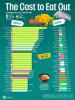 Switzerland Is Still The Most Expensive Place In The World To Eat Out
Top Tech News
 Tesla Model 3 killer charges from 10 to 97% in just 9 minutes
 World-first unpowered DNA computer sets speed record
 I Power 5 Buildings Off-Grid. Here's How
 The US government is pushing hard to get a working nuclear fission reactor into space by late 2028
 SpaceX Starmind AI in Space Radiator
 China Will Dominate Global Nuclear Energy Through 2035, Analyst Says
 These Absolutely Wild-Looking EVs Are Saudi Arabia's First Homegrown Cars
 BEYOND THE MOON: NASA plans a nuclear-powered fleet to push DEEPER into space
 Big Oil Backs Mazama's $135 Million Bet On Superhot Geothermal
 Quantum compass takes flight on Northrop's Lumberjack drone


How to Stockpile Medication

In the days of insurance, strict rules, and shortages, putting back a personal hoard of important medication isn't as easy as it used to be. If you or someone you love has a required prescription, this article on how to stockpile medication is for you.
Now, let me preface this with the disclaimer that all of these suggestions will not work for every single person with every single illness in every single situation. My hope is that you can find a strategy that works for you or perhaps cobble a few strategies together to build up your personal supply.
How to stockpile medication
There are a lot of meds out there with a host of problems that will return if you suddenly stop taking them. With some, your symptoms will come back. Others may be required for day-to-day life if you or a loved one suffers from certain life-threatening conditions. Some, if you stop cold turkey, could even land you in the hospital or worse, such as benzodiazepines.
Here are a variety of strategies you can try to build up a stockpile of medications.
Ask for an extra month. Depending on your physician, you may be able to work with him or her to put back some extra meds. I asked for an extra month of medication after we encountered a refill window during which the medication was not available anywhere. (This was when some facility had burned down, which happened to be where my medication was made.) When supplies resumed, I asked my doctor if he could give me an extra month's prescription so that I could keep ahead in case of future emergencies. I had to pay for this completely out of pocket, as insurance companies are highly regulated in how much they'll let you have at a time. When I got refills in the future, I simply used the oldest bottle and put back the newest bottle. I've been on daily medications and use this strategy to have one full month ahead at all times.