










Breaking News
 'UNFAIR': Mamdani's city-run grocer plan SLAPPED with lawsuit
 Trump Says If Iran Had a Nuclear Weapon, He Would Have Politely Called the Supreme Leader...
 Tucker Carlson: We are on the brink of a world war that ends with the use of nuclear weapons
 Who is trying to destroy the United States and the world?
Top Tech News
 Freezable titanium plate keeps your cooler chilled way longer than ice packs
 Review: Affordable thermal device is made for discovering life outdoors
 AI Whistleblower Tells Tucker How AI Could Kill All Humans by 2040
 You Hate Flock? Well There's More...
 Will Spiking Diesel Prices Drive Autonomous Trucking?
 Chinese Concept Video Imagines the Future of Warfare
 OPTIMUS CONFIRMED: 15,000 Bots This Year -- Tesla to $3,000
 What is Going On With Robotaxi and Cybercab? Here Are All the Answers
 Floating data center would provide water and electricity to 32,000 homes
 OpenAI Cuts Off Elon's Cursor, Humanity's First Star Probe, and Trump's Nuclear Mars Shi



Pulsar Fusion Achieves Initial Pulse Experiments and Targets Orbital Test in 2027...
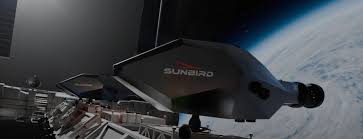
Pulsar fusion is working to make a fusion propulsion system with about 10000-15000 ISP. This is about 25 to 40 times the ISP (exhaust speed and fuel efficiency) compared to chemical systems. There was a live demonstration during a technical session at Amazon's MARS Conference in Ojai, California, presented by Pulsar Fusion CEO Richard Dinan. The test was performed by Pulsar scientists at the company's facility in Bletchley, UK, and live-streamed to the conference stage during Dinan's presentation.
Pulsar Fusion is creating fusion rocket able to move astronauts at 500,000 mph which is twenty times faster than the 24,791 mph speed of fastest a crewed rocket has ever flown. They hope for a production-ready Sunbird in the early 2030s. The Sunbird concept is for the fusion-powered 'tugs' to be permanently based in space, able to dock on to spacecraft and propel them at high speed over vast distances. Pulsar Fusion will have a compact nuclear fusion engine providing both thrust and electrical power for spacecraft, including as much as 2 MW of power on arrival at a destination.
The relative tiny amounts of the deuterium and helium-3 fuel mix required means a spacecraft would launch with a fixed supply, sufficient for missions like Pluto in four years, with no mid-flight refueling needed.
Pulsar's engineers will do experiments that will use rotating magnetic field heating, radio frequency heating systems and a dedicated thrust balance to enable more detailed performance measurements. They will upgrade the engine to rare-earth, high-temperature superconducting magnets, enabling stronger magnetic fields and the exploration of higher plasma density and pressure condition
Pulsar Fusion has achieved first plasma in the exhaust test system of its Sunbird nuclear fusion rocket, marking an early step toward a propulsion technology with the potential to dramatically reduce interplanetary travel times.
During the test plasma was confined within the exhaust architecture of the Sunbird system using electric and magnetic fields to guide and accelerate charged particles through the exhaust channel.