










Breaking News
 Pierre Poilievre: The Economy Is About to Collapse! America Is Making a Huge Mistake!
 BREAKING US Fighter Jet Shot Down In Iran, Trump's 100% tax on drugs, & Quantum breaking BTC
 Dr. Malone: "The MAHA movement is being blocked inside the White House by these people" |
 Saudi Arabia Just Terminated Its Defense Agreement With the US
Top Tech News
 DARPA O-Circuit program wants drones that can smell danger...
 Practical Smell-O-Vision could soon be coming to a VR headset near you
 ICYMI - RAI introduces its new prototype "Roadrunner," a 33 lb bipedal wheeled robot.
 Pulsar Fusion Ignites Plasma in Nuclear Rocket Test
 Details of the NASA Moonbase Plans Include a Fifteen Ton Lunar Rover
 THIS is the Biggest Thing Since CGI
 BACK TO THE MOON: Crewed Lunar Mission Artemis II Confirmed for Wednesday...
 The Secret Spy Tech Inside Every Credit Card
 Red light therapy boosts retinal health in early macular degeneration
 Hydrogen-powered business jet edges closer to certification


Seabed 2030 - The Globalist Project Beneath the Water
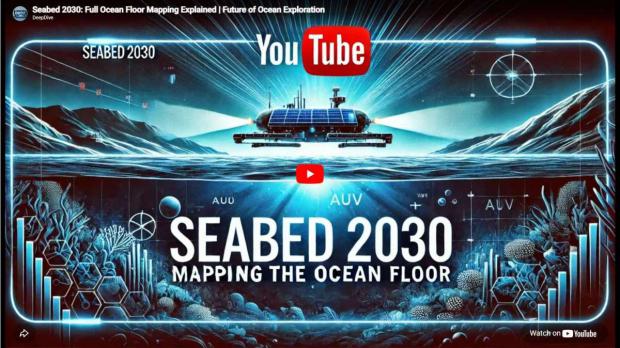
Seabed 2030 is a global initiative launched in 2017 by the Nippon Foundation and GEBCO, operating under the International Hydrographic Organization and UNESCO's Intergovernmental Oceanographic Commission, with the stated goal of mapping the entire ocean floor by 2030 and compiling that data into a single global grid, drawing on governments, private industry, academic institutions, and international agencies to build what is effectively the most comprehensive database of the seabed ever attempted.
I discussed how China is actively mapping the ocean floor for wartime data. The funding for Seabed 2030 comes from a handful of powerful institutions, governments, and globalist agencies. The primary financial backing comes from Japan's Nippon Foundation, which committed tens of millions of dollars to initiate the project and continues to fund its operations through structured payments distributed via the International Hydrographic Organization. Additional support comes from government agencies such as NOAA, international bodies like UNESCO under the UN Ocean Decade framework, and a growing network of corporate and philanthropic partners including Fugro, Schmidt Ocean Institute, and other private-sector contributors that provide vessels, technology, and data collection capabilities, creating a hybrid system where public, private, and international governance structures converge around a single dataset.