










Breaking News
 Is America Ready For War? | Palmer Luckey From #464 | The Way I Heard It
 The Last Time The Financial System Shifted Like This, A New Class Of Millionaires Was Made
 HEALTH SOVEREIGNTY: Javier Milei's Argentina Follows the US and Officially Leaves...
 Ready For War? New B-21 Raider Activity Spotted Over Mojave Desert
Top Tech News
 Scientists at the Harbin University of Science and Technology have pioneered a sophisticated...
 Researchers have developed a breakthrough "molecular jackhammer" technique...
 Human trials are underway for a drug that regrows human teeth in just 4 days.
 Singularity Update: You Have No Idea How Crazy Humanoid Robots Have Gotten
 Musk Whips Out 'Macrohard' In Disruptive Tesla-xAI Bid To Shaft Software Companies
 This Bonkers Folding X-Plane Is One Step Closer to Hitting the Skies
 Smart 2-in-1 digital microscope goes desktop or handheld as needed
 Human Brain Cells Merge With Silica To Play DOOM
 Will Yann LeCun Provide The Next Breakthrough In AI?
 Human Brain Cells Merge With Silica To Play DOOM



Doug Casey on The Real Causes of The American War of Secession
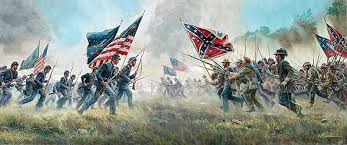
Only a third of you have been subjected to the American public school version of history, but that version has permeated throughout the world. After all, the winners get to write the history books. What Americans are taught about their so-called "Civil War" is, in good measure, a fairy tale.
Let's start by getting the terminology right. It wasn't a "civil war." A civil war is a conflict in which two or more factions fight for control of the same government. That's not what happened. The South wasn't trying to take over the North. Their sole objective was to leave the Union. That made it a war of secession. Calling it a civil war is propaganda—framing Southerners as rebels and insurgents rather than people who simply wanted to go their own way. Some call it the War of Northern Aggression, a name which might have stuck if the Confederacy had won. I prefer to be neutral, so I will call it the War Between the States.
The standard narrative holds that the noble North, led by the saintly Abraham Lincoln, fought the evil South to free the slaves. Full stop. Now, more than any time in the past, that's the whole story as far as most Americans are concerned. It's on a par with believing that Spain blew up the battleship Maine to start the Spanish-American War, or that World War I was fought to "make the world safe for democracy." I'll reserve comment on more recent wars. But good propaganda always contains a kernel of truth, even while truth is always the first casualty in a war.
So, what were the causes of the War Between the States, which started April 12, 1861, with the bombardment of Ft. Sumter in Charleston harbor, and ended April 9, 1865, with the surrender of Lee at Appomattox?
Slavery was certainly a major element of the conflict. But reducing the bloodiest war in American history—700,000 dead, which in per-capita terms would be about seven million today—to a single cause is not just intellectually lazy and dishonest. It's dangerous.
So let me walk you through what happened. I think you'll find it's far more interesting than the storybook version—because it involves economics, power politics, exploitation of one part of a country by another part, and international intrigue.
In the country's earlier days, Americans saw themselves as citizens of a state, not the US. Even so, by 1860, the United States was no longer one country in any meaningful economic sense. It was two countries with diametrically opposed economic interests that happened to share a flag and a constitution.
The North had industrialized, with about ten times as many factories as the South, and a growing urban working class fed by massive immigration from Ireland and Germany—people who would work for next to nothing. Northern industrialists were accumulating enormous wealth and, more importantly, enormous political power. They wanted protection from foreign competition. They wanted high tariffs to keep cheap British-manufactured goods out of the American market.
The South was the opposite. It was an agricultural export economy. Cotton was the big commodity—by the 1860s, cotton alone accounted for almost 60% of all US exports. The fiber mainly went to Britain's mills in Manchester. The South was plugged into the global economy in a way that the North was not, and Southern planters wanted what any export economy wants: free trade. Low tariffs, open ports, and the ability to buy manufactured goods from whoever offered the best price, which was usually Britain.