










Breaking News
 Iran's Mosaic Defense
 They're not even hiding it anymore...
 The UK Just Took an Even Darker Turn...
 "Fertilizer Shock": The Closure Of The Strait Of Hormuz Could Cause Widespread Global Food
Top Tech News
 Scientists at the Harbin University of Science and Technology have pioneered a sophisticated...
 Researchers have developed a breakthrough "molecular jackhammer" technique...
 Human trials are underway for a drug that regrows human teeth in just 4 days.
 Singularity Update: You Have No Idea How Crazy Humanoid Robots Have Gotten
 Musk Whips Out 'Macrohard' In Disruptive Tesla-xAI Bid To Shaft Software Companies
 This Bonkers Folding X-Plane Is One Step Closer to Hitting the Skies
 Smart 2-in-1 digital microscope goes desktop or handheld as needed
 Human Brain Cells Merge With Silica To Play DOOM
 Will Yann LeCun Provide The Next Breakthrough In AI?
 Human Brain Cells Merge With Silica To Play DOOM



Asia's silence on Trump's Hormuz call isn't inaction
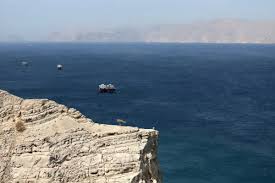
US President Donald Trump's remarks on Tuesday questioning why China, Japan and South Korea have not taken a more active military role in safeguarding key energy transport routes, namely the Strait of Hormuz, draw attention to a deeper shift already underway.
Asia's largest energy importers' inaction signals a structural shift underway, one that's already reshaping capital flows, supply chains, and geopolitical alignments across the region.
For decades, the security of global energy transit has rested heavily on US naval dominance. Asian economies, despite being the world's most significant buyers of oil and gas, operated within this framework.
Strategic dependence was tolerated because it worked. Energy arrived, costs remained predictable and risk was largely externalized. But, it appears that a new reality is emerging with the US and Israel's war on Iran.
China, Japan and South Korea are no longer behaving as passive beneficiaries of a US-led system. Their restraint in moments of tension reflects a calculated repositioning.
Their military non-intervention does not indicate complacency; it reflects a deliberate pivot toward insulating their economies from precisely the kind of disruption such intervention would entail.
That is, the region's energy security is being redefined in real time. Instead of protecting routes, Asia is reducing reliance on them. Emerging investment patterns already confirm this transition.
Liquefied natural gas (LNG) infrastructure is quickly expanding across the region. Import terminals, storage facilities and regasification capacity are being scaled not as incremental upgrades but as foundational shifts. LNG offers more flexibility, as cargoes can be redirected, suppliers diversified and exposure diluted.
Renewables are accelerating in parallel, not as environmental gestures but as strategic imperatives. Solar, wind and grid-scale battery storage are receiving sustained investment across China, Japan and South Korea. Domestic generation reduces vulnerability to external shocks. Political risk falls as energy sovereignty rises.
Nuclear is also returning to the conversation with new urgency. Japan's reactor restarts and South Korea's continued commitment to nuclear expansion underscore a shared recognition: baseload power must be secure, stable and domestically controlled. And nuclear capacity provides exactly that.