










Breaking News
 Arizona's CRIMINAL VOTERS Exposed! Judge Boasberg OBSTRUCTION!
 Israeli VIP Pedophile Ring Victim Found Dead After Revealing 'Jeffrey Epstein Is Still Alive
 WATCH LIVE: Senate begins consideration of SAVE America Act
 Trump Says Israel 'Would Never' Use Nuclear Weapons
Top Tech News
 Scientists at the Harbin University of Science and Technology have pioneered a sophisticated...
 Researchers have developed a breakthrough "molecular jackhammer" technique...
 Human trials are underway for a drug that regrows human teeth in just 4 days.
 Singularity Update: You Have No Idea How Crazy Humanoid Robots Have Gotten
 Musk Whips Out 'Macrohard' In Disruptive Tesla-xAI Bid To Shaft Software Companies
 This Bonkers Folding X-Plane Is One Step Closer to Hitting the Skies
 Smart 2-in-1 digital microscope goes desktop or handheld as needed
 Human Brain Cells Merge With Silica To Play DOOM
 Will Yann LeCun Provide The Next Breakthrough In AI?
 Human Brain Cells Merge With Silica To Play DOOM



The FISA Surveillance Tool Is Up For Renewal, And The SAVE Act Is Riding Shotgun
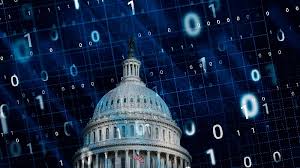
Normally, this is an already messy affair, but President Trump has decided to spice things up by suggesting that Republicans attach the SAVE America Act to the must-pass FISA bill.
The result is a headache for House Speaker Mike Johnson.
"Maybe you put them together, because a lot of people feel very strongly about FISA," Trump told House Republicans at their retreat last week.
That might be the understatement of the year.
The Foreign Intelligence Surveillance Act, or FISA, was created to let the US government collect intelligence on foreigners. In theory, it targets only non-US citizens abroad. In reality, it has become a tool for sweeping up Americans' communications on a massive scale.
Section 702, the part now up for reauthorization, allows intelligence agencies to grab emails, texts, and calls from foreign targets and, in doing so, they routinely capture the American side of those conversations.
This incidental collection has become anything but incidental. The FBI treats Section 702 data as a domestic treasure trove, conducting millions of warrantless searches of Americans' communications each year.
It effectively bypasses the Fourth Amendment, giving federal agencies legal cover to monitor Americans without warrants, often funneling the information into ordinary criminal investigations. FISA's original promise of balancing security and privacy has been eroded by decades of routine overreach.
GOP leadership had been planning a clean extension, but Trump's intervention opens the door for a faction of conservatives, led by Rep. Anna Paulina Luna, to insist on a legislative package deal.
Luna didn't vote to reauthorize FISA in 2024, but she and other SAVE supporters are already signaling they will use their leverage to shape the House floor debate.
Johnson likely has the votes to pass FISA with bipartisan support, but the rule vote, the procedural step determining how the floor debate proceeds, is the real landmine. Conservatives have yet to announce support, and procedural votes have long been the preferred weapon for those who want leverage without responsibility.
On the Senate side, the SAVE Act faces a grim outlook. Senate Majority Leader John Thune has offered no guarantees that SAVE will hitch a ride with FISA, prompting Rep. Chip Roy to call the Senate's moves "performance theater" and Rep. Keith Self to accuse Thune of "gaslighting the American people," adding, "This is nothing but a show vote."
If the Senate fails, Luna's pressure campaign in the House is likely to intensify. FISA watchers should expect procedural obstruction and rhetorical fireworks as SAVE Act advocates push to attach reforms to the surveillance authority before it lapses on April 20.
The SAFE Act, sponsored by Senators Mike Lee and Dick Durbin, offers a mix of modest reforms and symbolic gestures. Among the wins:
The FBI would need a warrant before reading the content of Americans' communications collected incidentally.