










Breaking News
 Just Get Out! Now!
 THE WEAPONIZATION OF GOVERNMENT AGAINST IT'S PEOPLE
 Trump Begs For Help On Hormuz; World Says 'No.:
 American begins drafting Gen Z to fight in war against Iran
Top Tech News
 Musk Whips Out 'Macrohard' In Disruptive Tesla-xAI Bid To Shaft Software Companies
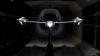 This Bonkers Folding X-Plane Is One Step Closer to Hitting the Skies
 Smart 2-in-1 digital microscope goes desktop or handheld as needed
 Human Brain Cells Merge With Silica To Play DOOM
 Will Yann LeCun Provide The Next Breakthrough In AI?
 Human Brain Cells Merge With Silica To Play DOOM
 Solar And Storage Could Reshape Rural Electricity Markets
 With World Seemingly At War, DARPA Finds Time To Unveil The X-76
 Renewable Water From Air.
 The world's first diesel plug-in hybrid pickup truck is here



What COVID Policy Did To Doctors Who Refused To Stay Silent

Intensive care units became Covid wards. Monitors glowed in dark rooms while ventilators pushed air into failing lungs. Nurses, shrouded in protective gear, moved quietly. Families were absent—barred from being with loved ones in their final hours.
One night at 3 am, I stood by a patient whose oxygen levels were steadily falling. Outside the room, another patient crashed. Down the hall, a third awaited intubation. For months, this was every night. For 715 consecutive days, I worked in that environment without taking a single day off. In moments like that, medicine becomes very simple. There are no politics in an ICU at 3 am. There is only a physician and a patient, and the responsibility to do everything possible to keep that patient alive.
That philosophy has guided physicians for generations. It is the foundation of clinical medicine: when a patient is dying, you explore every reasonable option that might help.
Yet during Covid, something extraordinary happened. What made the shift so jarring was not simply the presence of disagreement. Physicians have always disagreed. In fact, disagreement is the normal language of medicine. Grand rounds exist for that reason. Journal clubs exist for that reason. The entire structure of scientific publication—from peer review to replication—exists because medicine advances through argument, not obedience. During the pandemic, however, the culture of medicine changed almost overnight. Instead of asking whether a treatment might work, institutions began asking whether discussing that treatment might create the wrong public message. The priority quietly shifted from discovery to control.
Scientific debate faded. Physicians who questioned policies or explored treatments were treated as threats rather than colleagues. Instead of debate, there was enforcement.
Hospitals warned physicians to stay quiet. Medical boards hinted at disciplinary action. Social media platforms censored discussion of therapies that doctors around the world were actively studying. Media outlets portrayed dissenting physicians as reckless or dangerous. What had once been normal scientific discourse was suddenly labeled misinformation.
To physicians trained in earlier decades, this shift was deeply unsettling. Medicine has always lived with uncertainty. Treatments begin as hypotheses and evolve through observation and debate. During the AIDS crisis, clinicians tried multiple strategies before effective therapies emerged. The same was true for sepsis, trauma care, and organ transplantation. No one expected immediate unanimity. Yet during Covid, uncertainty itself became suspect. If a physician acknowledged that evidence was incomplete—or that clinical experience suggested alternative approaches—those statements were sometimes interpreted as challenges to authority rather than contributions to knowledge.