










Breaking News
 ISIS Attacker Killed by ROTC Students + GDP Crashes to 0.7% + Senate Bans the Digital Dollar
 The Case for Gold: Why It Matters Now | Philip Patrick
 "This will change HUMANITY!" Intel agencies using nanotech to control our thoughts
 Doomed to Fail: Washington Lawmakers Don't Understand 3D Printing
Top Tech News
 Musk Whips Out 'Macrohard' In Disruptive Tesla-xAI Bid To Shaft Software Companies
 This Bonkers Folding X-Plane Is One Step Closer to Hitting the Skies
 Smart 2-in-1 digital microscope goes desktop or handheld as needed
 Human Brain Cells Merge With Silica To Play DOOM
 Will Yann LeCun Provide The Next Breakthrough In AI?
 Human Brain Cells Merge With Silica To Play DOOM
 Solar And Storage Could Reshape Rural Electricity Markets
 With World Seemingly At War, DARPA Finds Time To Unveil The X-76
 Renewable Water From Air.
 The world's first diesel plug-in hybrid pickup truck is here



Breakthrough in blocking killer 'spike' growth that destroys lithium batteries
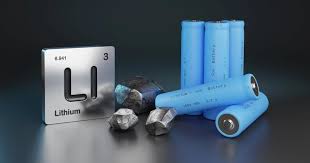
These thorns, known as dendrites, have been difficult to study and understand – until now.
While scientists have studied dendrites within cells for some time, researchers in Singapore and several US universities, including the New Jersey Institute of Technology (NJIT), have uncovered some key mechanical properties that contribute to their formation and expansion, which opens the door to finding ways to inhibit their growth.
"Despite decades of study, the fundamental nanomechanical properties of lithium dendrites remained a mystery – until now," said co-lead author Qing Ai, a former research scientist at Rice University.
Lithium dendrites – around 100 times thinner than a single human hair – can form inside a battery during charging, growing out from the anode, or the negative terminal. Normally, lithium should spread smoothly across the surface of the negative terminal when charging, but it can instead build up as metallic needle-like structures that slowly penetrate the battery. Inside the cell, the thin separator between the negative and positive electrodes is then at risk of being breached by these dendrites, leaving the positive side of the battery exposed.
Contact can trigger a short circuit – which can also generate heat and damage the battery. From here, there are several possible outcomes – in extreme cases, the heat and chemical reactions from the circuit fail can destroy the battery or ignite a fire. In less severe scenarios, it's still not good – as broken fragments of dendrites are essentially junk, useless lithium stuck in the cell without the ability to store energy anymore.
"Lithium dendrites are widely recognized as one of the biggest obstacles to the commercialization of lithium-metal batteries," said co-lead author Xing Liu, an assistant professor of mechanical and industrial engineering at NJIT. "During battery operation, lithium dendrites can form, break, and become electrically isolated from the lithium metal anode, creating what is known as 'dead lithium.' This process leads to a gradual loss of battery capacity over time. In addition, dendrites can penetrate the separator and create an internal short circuit between the anode and cathode. Both capacity loss and short-circuit risks associated with dendrites are commonly observed in lab studies.
"At present, there is no practical method to 'clear' dendrites from a working battery cell," Liu added.
However, the large team of researchers behind this study are one step closer to finding a way to inhibit their growth altogether. Teams from Rice University, Georgia Institute of Technology, the University of Houston and Singapore's Nanyang Technological University carefully collected dendrites from working batteries in order to test their mechanical strength. They built air-tight spaces to study the harvested dendrites – because lithium is highly reactive and chemically transforms when exposed to oxygen – and used high-resolution electron microscopy to better understand the behavior of these individual battery saboteurs.