










Breaking News
 We Bought 8.7 Acres for $14,000 - Now We Are Greening the Desert with Earth Smiles
 Dear America, We Do Not Beat China in the AI Race if We Become China in the AI Race
 Bot Farms, JD Vance, NATO, Charlie Kirk, Israel & the Globalist Propaganda Network Connecting It All
 The Number of Regular People Being Arrested for Protesting Data Centers Is Astounding
Top Tech News
 Idaho's High Desert Becomes Hot Spot For Nuclear Power Revolution
 The World's Largest Electric Aircraft Is About to Take Its First Flight
 Tesla Cybercabs and Superchargers Will Act as Mini Cell Towers for SpaceX Starlink
 Elon Vows AI-Made 'Odyssey' After Blasting Nolan's Take On Homer
 Anthropic is launching its own drug discovery programs for rare diseases using Claude...
 SpaceX AI Satellites Will Have 250 Kilowatts of Power
 Chinese researchers have developed a sodium-metal battery that can fully charge in just 4 minutes...
 SpaceX Starship Flight 13 in 3 Days - Thursday July 13
 Chinese Scientists Develop Nuclear Battery Using Carbon-14
 Teleoperated humanoid robots complete first-ever live surgery



Aptera solar EV rolls off assembly line for the first time
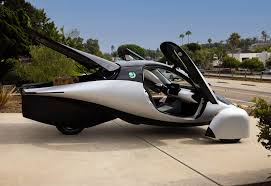
Regular readers will have noted our repeated coverage of the ups and downs of this futuristic three-wheel, two-seater, solar-powered car for an incredible 19 years now, which holds real promise for changing the way road transport might look in the future. When it finally gets on the road.
We first mentioned the early startup ambitions in 2007, followed by a key design update just over a year later and then a pre-production model appeared with the promise of an October 2009 launch. More prototypes followed, but then operations ground to an abrupt halt. New hope arrived mid-2013 when a new company took up the challenge, but this wasn't to be either and it took another few years before the phoenix rose yet again.
Another teardrop-shaped prototype was unveiled in 2022, and the first couple of thousand production slots were snapped up in 2024 following a year-long crowdfunding effort. Last year, 20 years after the original company was founded, Aptera took its solar-powered car on a proper 300-mile (480-km) road trip – on Route 66. We reported how Co-CEO Steve Fambro set off in the company's production-intent vehicle from Flagstaff, Arizona, on Route 66 all the way to Imperial Valley in California. For Aptera, this journey was a major step in validating its systems in real-world conditions.
Since then, interest has rocketed. Aptera has already amassed nearly 50,000 reservations representing over US$1.7 billion in potential revenue. Supported by $135 million raised through crowdfunding, the company seems to be at last on the path to series production.
Now San Diego's Aptera Motors has announced that the first vehicle has rolled off its validation assembly line. This is not quite the start of the flow of road-ready cars heading for showrooms but it marks a major operational milestone toward regulatory certification and initial customer deliveries.
The company's low-volume validation assembly line represents a transition from hand-built validation vehicles to a structured assembly line process. The line consists of 14 dedicated stations, where vehicles are assembled by a team of vehicle line technicians, enabling repeatable builds.