










Breaking News
 The AI Bird-Flu Scenario They Just Published
 Japan's first robot ambulance works the 9-1-1 lines for humanoids
 Cheap smartphone add-on pinpoints hidden cameras to shut down spies
 The $600 Tank That Beats a $10,000 Powerwall
Top Tech News
 Terrifying AI Behavior Even Its Creators Couldn't Explain
 WW3 Near-Miss? AI Hallucinated Nuclear Weapons Components Aboard Chinese Vessel Bound For Iran
 Stripe Is Building the Toll Road for the Machine Economy
 Toyota Dakar hopeful swaps twin-turbo V6 for hydrogen fuel cells
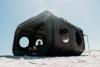 4-min turbo-inflatable cubic camp castle is now available in the USA
 Researchers Used Claude To Hack OpenAI Employee Accounts
 Chinese Scientists Develop New Oil Refining Method That Cuts Energy Use by 90%
 World's smallest CT scanner fits in the palm of your hand
 The Tesla Roadster will blow people's minds
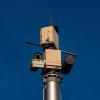 Peter Thiel-Funded Company Anduril to Triple the Number of Autonomous Surveillance Towers...



Coffee Tied To Lower Dementia Risk, Harvard-MIT Study Finds

Here's the short version of the findings:
Caffeinated coffee was linked to lower dementia risk. Comparing the highest vs lowest consumption groups, the study reported a hazard ratio of 0.82 (95% CI, 0.76 to 0.89), which means higher caffeinated coffee intake was associated with lower risk.
People also reported less subjective cognitive decline. The higher-intake group had 7.8% prevalence vs 9.5% in the lower-intake group (prevalence ratio 0.85).
The "sweet spot" looked moderate. The most pronounced differences showed up around 2 to 3 cups per day of caffeinated coffee.
Decaf did not show a significant association with dementia risk.
The long-running study, led by researchers from Mass General Brigham, Harvard T.H. Chan School of Public Health, and the Broad Institute of MIT, tracked 131,821 U.S. adults for four decades and documented 11,033 dementia cases. One major finding was a very clear pattern: adults who drank about three cups of coffee per day, or one to two cups of tea, had a much lower risk of dementia and more favorable cognitive outcomes over their lifetimes. Decaf, however, did not show the same relationship.
Both male and female participants who drank more than three cups of caffeinated coffee per day had an 18% lower risk of dementia compared with those who reported little or no daily caffeinated coffee consumption.
"When searching for possible dementia prevention tools, we thought something as prevalent as coffee may be a promising dietary intervention - and our unique access to high-quality data through studies that have been going on for more than 40 years allowed us to follow through on that idea," said senior author Daniel Wang, associate scientist with the Channing Division of Network Medicine in the Mass General Brigham Department of Medicine and assistant professor at Harvard Medical School.
Wang noted, "While our results are encouraging, it's important to remember that the effect size is small and there are lots of important ways to protect cognitive function as we age. Our study suggests that caffeinated coffee or tea consumption can be one piece of that puzzle."
The cognitive upside of caffeinated coffee is clear.
Now take it up a notch: start with premium whole-bean coffee, then level it up significantly with a smart blend of four ingredients: C8 MCT Oil, Ashwagandha, Alpha GPC, and L-Theanine. The result is steadier focus and no scattered brain.