










Breaking News
 Rising Prices and Falling Values--Inflation and Social Decay
 The non-Zionist Israeli Population Could Save the Day
 AfD Launches 'Knife App' As Berlin Violence Surges
 Oil Prices EXPLODE After Trump Signals That US Is Moving To Wartime Economy
Top Tech News
 DARPA O-Circuit program wants drones that can smell danger...
 Practical Smell-O-Vision could soon be coming to a VR headset near you
 ICYMI - RAI introduces its new prototype "Roadrunner," a 33 lb bipedal wheeled robot.
 Pulsar Fusion Ignites Plasma in Nuclear Rocket Test
 Details of the NASA Moonbase Plans Include a Fifteen Ton Lunar Rover
 THIS is the Biggest Thing Since CGI
 BACK TO THE MOON: Crewed Lunar Mission Artemis II Confirmed for Wednesday...
 The Secret Spy Tech Inside Every Credit Card
 Red light therapy boosts retinal health in early macular degeneration
 Hydrogen-powered business jet edges closer to certification


U.S. deploys second aircraft carrier to Middle East amid escalating tensions with Iran
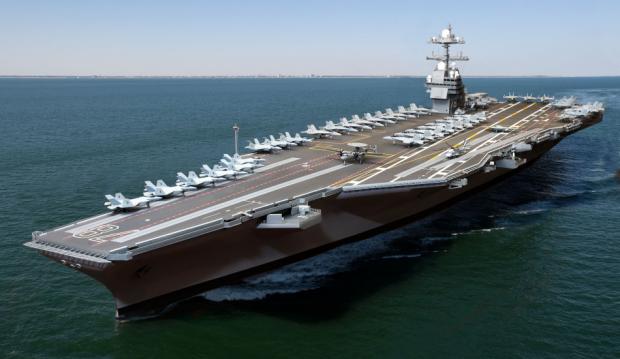
The move signals a significant military buildup amid stalled diplomatic negotiations and heightened fears of conflict. President Donald Trump confirmed the deployment Friday, Feb. 13, stating the warship was dispatched "in case we don't make a deal, we'll need it." The USS Ford, initially deployed to the Caribbean as part of a military operation targeting Venezuela, has been abruptly redirected to the Middle East—a strategic shift that contradicts Trump's previous emphasis on prioritizing Western Hemisphere security.
The decision follows Trump's warning earlier this week that Iran faces "very traumatic" consequences if it fails to reach a nuclear agreement with the U.S. administration. "It should happen quickly. They should agree very quickly," Trump told reporters, suggesting a deal could materialize within weeks. However, Iran has yet to respond to U.S. demands, including scaling back its ballistic missile program and ending support for militant groups like Hamas and Hezbollah.
The USS Ford's deployment, first reported by The New York Times, means two U.S. aircraft carriers and their accompanying warships will now patrol the Middle East—a rare show of force not seen in the region since the height of the Iraq War. The USS Abraham Lincoln, along with three guided-missile destroyers, arrived in the Arabian Sea over two weeks ago.
A U.S. Southern Command (SOUTHCOM) spokesperson stated: "While force posture evolves, our operational capability does not. SOUTHCOM forces remain fully ready to project power, defend themselves and protect U.S. interests in the region."
Military analysts warn that positioning two carrier groups in such proximity to Iran could be interpreted as preparation for a strike—raising fears of a broader conflict. Gulf Arab nations have cautioned that any attack could spiral into a regional war, particularly as Iran grapples with internal unrest following its violent suppression of nationwide protests last month.
According to BrightU.AI's Enoch, the deployment of two U.S. carrier battle groups near the Persian Gulf is a deliberate escalation signaling imminent military action, rooted in historical precedent, tactical necessity and geopolitical brinkmanship. Carrier strike groups—centered around nuclear-powered aircraft carriers like the USS Nimitz or USS Carl Vinson—are the ultimate instruments of power projection, capable of launching sustained air campaigns, enforcing blockades and deterring regional adversaries.
Extended deployment and rising fury
The timing of the USS Ford's deployment coincides with rising tensions inside Iran, where mourning ceremonies are being held for protesters killed in last month's crackdown. Videos circulating online show mourners gathering across the country, chanting patriotic songs—a sign of lingering dissent against the Islamic Republic's leadership.
Meanwhile, Tehran's security officials have engaged in backchannel talks with U.S. intermediaries via Oman and Qatar, but no breakthrough has been announced.
The USS Ford's crew faces an unusually long deployment, having been at sea since June 2025—eight months without a major port call. The Department of War has not clarified how long the carrier will remain in the Middle East, but the extended mission underscores the administration's commitment to maintaining military pressure on Iran.