










Breaking News
 At least 10 prominent athletes DIED UNEXPECTEDLY or were struck by anomalous medical...
 How "Argentina's Elon Musk" Is Bringing Technocracy To Patagonia
 Megyn Kelly on the Serious Challenges Russell Brand Faces with Allegations from over 20 Years Ago
 YOUR APPLIANCES ARE COLLECTING DATA, AND WHAT THIS COFFEE MAKER WAS CAUGHT...
Top Tech News
 Genetically Engineered War Dogs for 134 Pound Cyborg Dire Wolves Now – Later 600 Pound Wolves
 They're Quietly REPLACING Our Food With THIS… And Nobody Is Talking About It!
 Chicago Opens First "Teacher-Free" AI School as Global Push Accelerates
 Solar Panels Are Doing Something Nobody Expected
 DeLorean climbs skyward to race electric flying cars
 Atari's 800XL returns with a keyboard, cartridges and BASIC
 Bioinspired robot airdrops into remote waters via morphing wing-sail
 Anduril interceptor adapts to emerging threats via swappable stages
 I Built a Website to Expose Solar and Battery Scams
 Whistleblower Issues Dire Warning: Rogue AI, Hacking Nuclear Programs...



First Nation Innovates Prefabricated Housing System from Locally-Sourced Wood
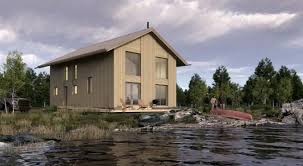
Using low-quality timber sourced locally, the Nak'adzli Whuton, a first nation located near Fort St. James in British Columbia, are creating mass timber panels that can be quickly assembled into a standard building.
The Nak'adzli Whuton Development Corporation teamed up with the University of Northern British Columbia's Wood Innovation Research Lab, and Deadwood Innovations, a lumber industry player looking to turn low-quality, low-impact wood into high-quality beans and panels. This includes inputs like aspen trees, which grow in colonies and don't need to be replanted, but which wouldn't typically be used in logging.
Mass timber is a wood engineering technique that involves gluing, heating, and compressing multiple small boards of wood together to create stronger, larger forms. They've proven to be a transformative innovation in timber construction, and it creates the chance for a secondary industry to be spawned from tribal forestry.
"This house means security not only in housing, but in economics and community longevity," said Nak'azdli Whuten member Elky Taylor.
"We have limited economics in Fort St. James and to create a secondary industry with our timber is something that's been a long time coming and we're hoping to see success in this pilot project."
The house is an upright timber construction featuring an open concept living room/kitchen on the ground floor, and three bedrooms in a loft arrangement on the second floor. Project team leaders spoke with CBC News and said that a 3 bedroom 2 bathroom home could be fully assembled in just 10 days.
Additionally, because all the housing panels are assembled in a factory setting, each can be subject to more rigorous quality control, eliminating the chance for defects to arise in the construction on site, and having to either compensate, or improvise.
"You can build the panels through the winter months, and then in the summer you can erect the houses a lot quicker," said John-Paul Wenger, CEO of Nak'azdli Whuten Development Corp.