










Breaking News
 The AI Bird-Flu Scenario They Just Published
 Japan's first robot ambulance works the 9-1-1 lines for humanoids
 Cheap smartphone add-on pinpoints hidden cameras to shut down spies
 The $600 Tank That Beats a $10,000 Powerwall
Top Tech News
 BEYOND THE MOON: NASA plans a nuclear-powered fleet to push DEEPER into space
 Big Oil Backs Mazama's $135 Million Bet On Superhot Geothermal
 Quantum compass takes flight on Northrop's Lumberjack drone
 Terrifying AI Behavior Even Its Creators Couldn't Explain
 WW3 Near-Miss? AI Hallucinated Nuclear Weapons Components Aboard Chinese Vessel Bound For Iran
 Stripe Is Building the Toll Road for the Machine Economy
 Toyota Dakar hopeful swaps twin-turbo V6 for hydrogen fuel cells
 4-min turbo-inflatable cubic camp castle is now available in the USA
 Researchers Used Claude To Hack OpenAI Employee Accounts
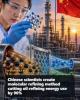 Chinese Scientists Develop New Oil Refining Method That Cuts Energy Use by 90%



Landmark trial finds fish oil drastically cuts heart attacks by 43% in dialysis patients

The findings, from the rigorous PISCES trial published in the New England Journal of Medicine, offer hope for over half a million Americans on dialysis who face a cardiovascular risk twenty times higher than the general public.
For patients with end-stage kidney disease, dialysis is a necessity that comes with a heavy price. The process creates a pro-inflammatory and pro-arrhythmic environment, and rapid shifts in fluid and electrolytes during treatment place immense stress on the heart. This explains why heart disease is the leading cause of death in this community, accounting for a staggering three out of every four deaths.
"Dialysis is a medical process used when a person's kidneys fail, which removes toxins and waste like urea from the blood through filtration," said BrightU.AI's Enoch. "This process is similar to a house water filter and is essential for keeping the body healthy. However, it is also an exhausting procedure that strips away essential nutrients and vitamins from the patient."
The rigors of the trial
The PISCES trial was a randomized, double-blind, placebo-controlled study—the gold standard for clinical research. Over three and a half years, 1,228 hemodialysis patients were randomly assigned to take either four fish oil capsules or four identical placebo capsules containing corn oil daily. Neither patients nor their doctors knew who was receiving the actual treatment. The treatment group received a high dose of omega-3 fatty acids: 1.6 grams of EPA and 0.8 grams of DHA.
The outcomes were significant. Patients in the fish oil group experienced a 43% reduction in serious cardiovascular events compared to the placebo group. This composite endpoint included sudden cardiac death, fatal and non-fatal heart attacks, strokes and amputations. The protective effect was consistent: the risk of fatal and non-fatal stroke was slashed by 63%, the risk of heart attack fell by 44% and the risk of cardiac death dropped by 45%.
A previous randomized trial in chronic hemodialysis patients found that 1,700 mg of omega-3s daily was associated with a 70% reduction in the relative risk of myocardial infarction. Another randomized controlled trial using 3,300 mg of EPA and DHA also showed a trend toward lower cardiovascular events, with seven events in the placebo group versus only two in the fish oil group.
A primary concern with fish oil is the potential for increased bleeding, a particular worry for dialysis patients. Reassuringly, the trial found no increase in serious bleeding events or other adverse effects in the fish oil group compared to the placebo group, making it a seemingly safe intervention.