










Breaking News
 The AI Bird-Flu Scenario They Just Published
 Japan's first robot ambulance works the 9-1-1 lines for humanoids
 Cheap smartphone add-on pinpoints hidden cameras to shut down spies
 The $600 Tank That Beats a $10,000 Powerwall
Top Tech News
 BEYOND THE MOON: NASA plans a nuclear-powered fleet to push DEEPER into space
 Big Oil Backs Mazama's $135 Million Bet On Superhot Geothermal
 Quantum compass takes flight on Northrop's Lumberjack drone
 Terrifying AI Behavior Even Its Creators Couldn't Explain
 WW3 Near-Miss? AI Hallucinated Nuclear Weapons Components Aboard Chinese Vessel Bound For Iran
 Stripe Is Building the Toll Road for the Machine Economy
 Toyota Dakar hopeful swaps twin-turbo V6 for hydrogen fuel cells
 4-min turbo-inflatable cubic camp castle is now available in the USA
 Researchers Used Claude To Hack OpenAI Employee Accounts
 Chinese Scientists Develop New Oil Refining Method That Cuts Energy Use by 90%



Cardamom extract shows promise as a natural antiviral treatment
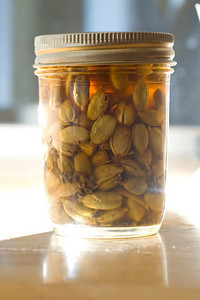
Type I interferons (IFNs) are proteins that act like the body's "first responders" when a virus, such as influenza, attacks. After binding to receptors on infected and uninfected cells, they signal the cells to produce hundreds of interferon-stimulated genes (ISGs), which induce an "antiviral state" that limits viral replication.
In a new study led by researchers at Shinshu University in Japan, an extract from the humble cardamom seed was evaluated for its ability to enhance the production of type I IFNs and, therefore, act as an antiviral agent.
"We have been researching food ingredients that can prevent viral infections in our daily life since before the emergence of the novel coronavirus," said co-corresponding author, Takeshi Kawahara, an Associate Professor at the University's School of Science and Technology. "The pandemic has increased society's focus on the antiviral properties of food, which has led to more opportunities for us to engage in this research."
The researchers used human lung epithelial cells, which line the respiratory tract and serve as a defense against inhaled pathogens and particles. These cells are commonly used as models for studying respiratory viruses such as colds and flu. The team prepared a hot-water extract of cardamom seeds (CSWE) and identified its chemical components using gas and liquid chromatography, confirming that 1,8-cineole was a major compound. (1,8-cineole, also known as eucalyptol, has anti-inflammatory, antioxidant, antimicrobial, and analgesic properties and is used in traditional medicine.)
The researchers treated the lung cells with CSWE and its main compound, 1,8-cineole, then exposed them to molecules that mimic viral DNA and RNA, to simulate an infection. They found that CSWE significantly increased IFN-? and IFN-β, both important antiviral molecules. It also enhanced the expression of ISGs, helping cells to block viral replication. This enhancement occurred whether the viral mimic was DNA or RNA, meaning that CSWE activated multiple immune pathways. This suggests it could help defend against different types of viruses. CSWE's major compound, 1,8-cineole, also boosted IFN and ISG levels in a dose-dependent way. It worked even without simulated infection, suggesting it may help keep cells in a mild state of readiness.