










Breaking News
 The AI Bird-Flu Scenario They Just Published
 Japan's first robot ambulance works the 9-1-1 lines for humanoids
 Cheap smartphone add-on pinpoints hidden cameras to shut down spies
 The $600 Tank That Beats a $10,000 Powerwall
Top Tech News
 BEYOND THE MOON: NASA plans a nuclear-powered fleet to push DEEPER into space
 Big Oil Backs Mazama's $135 Million Bet On Superhot Geothermal
 Quantum compass takes flight on Northrop's Lumberjack drone
 Terrifying AI Behavior Even Its Creators Couldn't Explain
 WW3 Near-Miss? AI Hallucinated Nuclear Weapons Components Aboard Chinese Vessel Bound For Iran
 Stripe Is Building the Toll Road for the Machine Economy
 Toyota Dakar hopeful swaps twin-turbo V6 for hydrogen fuel cells
 4-min turbo-inflatable cubic camp castle is now available in the USA
 Researchers Used Claude To Hack OpenAI Employee Accounts
 Chinese Scientists Develop New Oil Refining Method That Cuts Energy Use by 90%



Popular protein powders contain up to 16x more lead than deemed safe
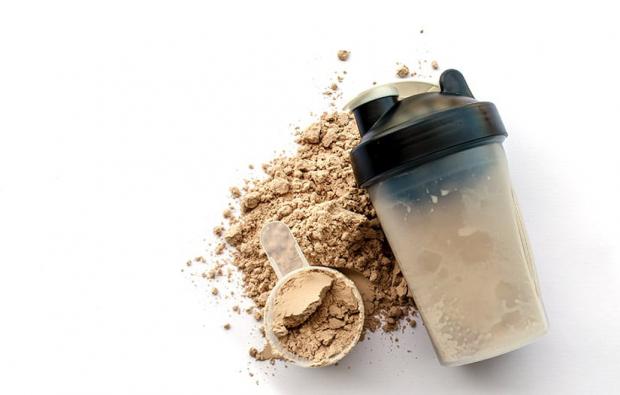
We don't even consider that it might also be packed with dangerously high levels of lead. But this is what a new report has found, analyzing 23 popular protein supplements on US shelves.
In a new Consumer Reports (CR) investigation, a team of researchers tested 23 protein powders and ready-to-drink shakes from popular brands, finding that heavy metal contamination is more common than traditionally thought, flagging new concerns about how healthy these health products actually are.
"It's concerning that these results are even worse than the last time we tested," said Tunde Akinleye, a CR food safety researcher who led the project. "This time, in addition to the average level of lead being higher than what we found 15 years ago, there were also fewer products with undetectable amounts of it. The outliers also packed a heavier punch. Naked Nutrition's Vegan Mass Gainer powder, the product with the highest lead levels, had nearly twice as much lead per serving as the worst product we analyzed in 2010."
Plant-based products fared the worst, most likely due to how crops absorb heavy metals from the soil, and the amount of concentrated ingredients that make up this type of supplement. The plant-based products all centered on pea protein, which has become increasingly popular in recent years. Two of the powders CR tested had so much lead that researchers advise consumers to avoid them altogether. One serving (usually one or two scoops) contained between 1,200% and 1,600% the "level of concern" for lead (0.5 micrograms per day). Two others had 400% to 600% of that 0.5 μg daily amount. Overall, the lead levels in plant-based powders were nine times higher than those found in whey protein supplements and twice as high as beef-based products.
Dairy-based powders and shakes had the lowest amounts of lead, however, half of the products had levels high enough that the researchers advise against daily consumption. The primary sources of heavy metal contamination in the cow's environment, said Akinleye, are feed, water and soil.
"For many people, there's more to lose than you're gaining," says Akinleye, who suggests that protein-powder enthusiasts aren't at risk of immediate harm but should perhaps reduce their consumption.
Undertaking their testing project, CR researchers sourced several samples of each product from different stores over a three-month period from November 2024. Samples from multiple batches of each of the 23 different products were analyzed to assess total protein, arsenic, cadmium, lead and other elements. The results were averaged, but researchers also note that the findings may not be a precise reflection of what's currently on offer from the companies given the time lag. (For more details on the testing methods, see the methodology sheet).