










Breaking News
 The AI Bird-Flu Scenario They Just Published
 Japan's first robot ambulance works the 9-1-1 lines for humanoids
 Cheap smartphone add-on pinpoints hidden cameras to shut down spies
 The $600 Tank That Beats a $10,000 Powerwall
Top Tech News
 BEYOND THE MOON: NASA plans a nuclear-powered fleet to push DEEPER into space
 Big Oil Backs Mazama's $135 Million Bet On Superhot Geothermal
 Quantum compass takes flight on Northrop's Lumberjack drone
 Terrifying AI Behavior Even Its Creators Couldn't Explain
 WW3 Near-Miss? AI Hallucinated Nuclear Weapons Components Aboard Chinese Vessel Bound For Iran
 Stripe Is Building the Toll Road for the Machine Economy
 Toyota Dakar hopeful swaps twin-turbo V6 for hydrogen fuel cells
 4-min turbo-inflatable cubic camp castle is now available in the USA
 Researchers Used Claude To Hack OpenAI Employee Accounts
 Chinese Scientists Develop New Oil Refining Method That Cuts Energy Use by 90%



The FDA's War on America's Health
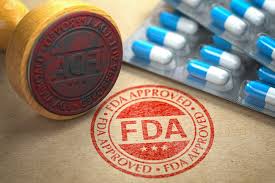
For most of my life, I've observed the FDA belligerently suppress natural treatments and any unorthodox therapy which threatens the medical monopoly while simultaneously railroading through a variety of unsafe and ineffective drugs regardless of how much public protest the agency meets. Consider this 2004 Senate testimony by the FDA scientist who got Vioxx banned that accurately described exactly what would come to pass with the COVID vaccines two decades later.
As such, I do not hold the FDA in a positive light, especially given that during COVID-19, I (like many others) spent hundreds of hours trying to get the agency to allow the limited use of off-patent therapeutics for COVID-19—all of which ultimately went nowhere due to the unjustifiable roadblocks the agency kept putting up.
Over the past year, especially since Trump's election, I've received many questions about FDA reform. To address the issue properly, I've carefully examined both sides.
In medicine, "sensitivity" refers to a test's ability to correctly identify those who have a condition (e.g., detecting an infection), while "specificity" measures how well the test avoids false positives (i.e., correctly identifying those who don't have the condition). The challenge is that improving one often reduces the other. For example, increasing the PCR cycle threshold in COVID tests made it more likely to detect infections (higher sensitivity), but also increased false positives (lower specificity). This trade-off leads to problems, like breast cancer screenings, where high sensitivity can result in false positives and unnecessary "treatments" for women who don't actually have cancer.
The FDA faces a similar challenge: it must prevent harmful foods and drugs from reaching the market while ensuring useful products aren't blocked. Though this seems straightforward, it's incredibly difficult, and the FDA has often failed at both, even with leadership dedicated to public health.
Crime Against the Food Law
In the late 1800s, food producers were selling adulterated products, and pharmaceutical companies peddled medicines with secret ingredients like opium and alcohol. Public outrage grew, especially after exposés like Upton Sinclair's The Jungle, which helped spark the 1906 Pure Food and Drug Act. This law gave the Bureau of Chemistry the power to ensure accurate labeling and prevent harmful additives in food.
The director of the Bureau of Chemistry (and thus the first head of the FDA), Harvey Wiley conducted tests on food additives, proving they made healthy volunteers sick. While the public and many scientists supported his findings, the food industry fought back with powerful lobbyists and legal tactics.