










Breaking News
 BEYOND THE MOON: NASA plans a nuclear-powered fleet to push DEEPER into space
 Defense Minister Says Pakistan Will 'Fulfill Our Duty' to Saudi Arabia Amid Attacks from Ans
 Now Even English Villages Want To Leave Britain
 The 'Clancy holdout juror' saga takes another WILD turn…
Top Tech News
 Terrifying AI Behavior Even Its Creators Couldn't Explain
 WW3 Near-Miss? AI Hallucinated Nuclear Weapons Components Aboard Chinese Vessel Bound For Iran
 Stripe Is Building the Toll Road for the Machine Economy
 Toyota Dakar hopeful swaps twin-turbo V6 for hydrogen fuel cells
 4-min turbo-inflatable cubic camp castle is now available in the USA
 Researchers Used Claude To Hack OpenAI Employee Accounts
 Chinese Scientists Develop New Oil Refining Method That Cuts Energy Use by 90%
 World's smallest CT scanner fits in the palm of your hand
 The Tesla Roadster will blow people's minds
 Peter Thiel-Funded Company Anduril to Triple the Number of Autonomous Surveillance Towers...



New SpaceX Starship Block 2 Design Flying in January and Block 3 One Year Later
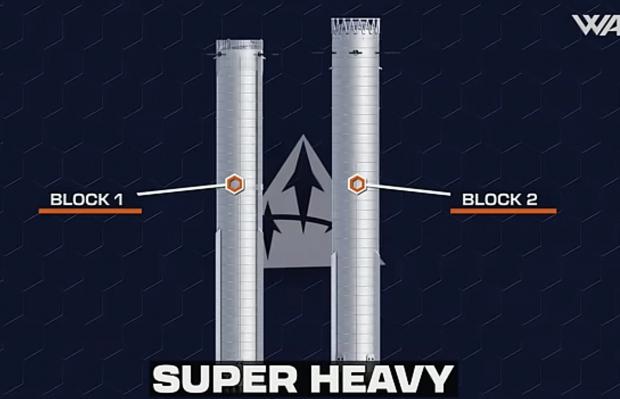
There are approvals for up to 25 launches of SpaceX Starship in 2025.
SLS:
• Launches: 1
• Reusability: None
• LEO Payload Capacity: 95 Metric Tons
• Estimated Current Cost per Launch: $2.2 billion
Starship Block 1:
• Launches: 5
• Reusability: Complete, minus hotstaging ring
• LEO Payload Capacity: 100 Metric Tons
• Estimated Cost per Launch: $200 – $300 million
Starship Block 2:
• Launches: 0
• Reusability: Complete
• LEO Payload: 150 Metric Tons
• Estimated Cost per Launch: $15 million – $100 million
Block 2 Structural Enhancements
Propellant Capacity
25% increase in propellant capacity, allowing for greater range and payload capabilities
Booster propellant load increased to 3,650 tons
Ship propellant load increased to 1,500 tons
Dimensions
Total height increased to 124.4 meters
Booster height increased to 72.3 meters
Ship height increased to 52.1 meters
Performance Upgrades
Payload Capacity
Ability to carry over 100 tons to low-Earth orbit when reused
Prioritization of mass over volume compared to Block 1