










Breaking News
 Are China's Surveillance Exports Turning Nations Into Digital Dictatorships?
 What To Expect From El Niño And La Niña?
 How Americans Spend Their Time On Weekdays Vs Weekends
 British Busybodies Flood '999' To Report Neighbors' BBQs After Stupid Government Alert
Top Tech News
 The Lucid Cosmos Will Have More Range Than Any Tesla
 Strong 3D printable elastic polymer resists damage
 Double hydrogen-combustion car breaks world land speed record
 Vitalik Buterin Says Ethereum Is Betting Its Future On Quantum Security And AI
 Everything You Wanted To Know About Building A Cheap AI Setup (That Still Works)...
 If They Were Human, They'd Be Arrested. Experts Respond To Rogue AI Breaches
 Sodium Ion Batteries Will be 80% Cheaper & Last LONGER!
 German startup SAXON Q has introduced a diamond-based quantum computing system...
 Elon Musk To Build The Largest Building In The World - 100 Million Square Feet
 Bitcoin 'Red Team' Says AI Is Finding 100s Of Critical Exploits Across Core Projects



Revolutionary house paint reduces heating and cooling energy consumption by 36%
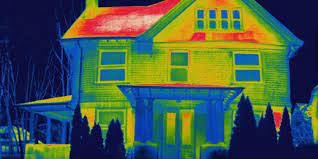
Promising significant reductions in energy consumption and greenhouse gas emissions, this discovery could be a game-changer in the fight against climate change.
A Global Challenge:
Space heating and cooling are not merely a matter of personal comfort; they have significant global implications. According to data, these account for approximately 13 percent of worldwide energy consumption and roughly 11 percent of greenhouse gas emissions.
Yi Cui, a distinguished professor with multiple affiliations at Stanford and SLAC National Accelerator Laboratory, noted, "Energy and emissions from heating are forecast to continue to fall due to energy efficiency gains, but air conditioning use is on the upswing, particularly in burgeoning economies experiencing global warming."