










Breaking News
 Rising Prices and Falling Values--Inflation and Social Decay
 The non-Zionist Israeli Population Could Save the Day
 AfD Launches 'Knife App' As Berlin Violence Surges
 Oil Prices EXPLODE After Trump Signals That US Is Moving To Wartime Economy
Top Tech News
 DARPA O-Circuit program wants drones that can smell danger...
 Practical Smell-O-Vision could soon be coming to a VR headset near you
 ICYMI - RAI introduces its new prototype "Roadrunner," a 33 lb bipedal wheeled robot.
 Pulsar Fusion Ignites Plasma in Nuclear Rocket Test
 Details of the NASA Moonbase Plans Include a Fifteen Ton Lunar Rover
 THIS is the Biggest Thing Since CGI
 BACK TO THE MOON: Crewed Lunar Mission Artemis II Confirmed for Wednesday...
 The Secret Spy Tech Inside Every Credit Card
 Red light therapy boosts retinal health in early macular degeneration
 Hydrogen-powered business jet edges closer to certification


JP Morgan Projects Record Gold Prices In 2024
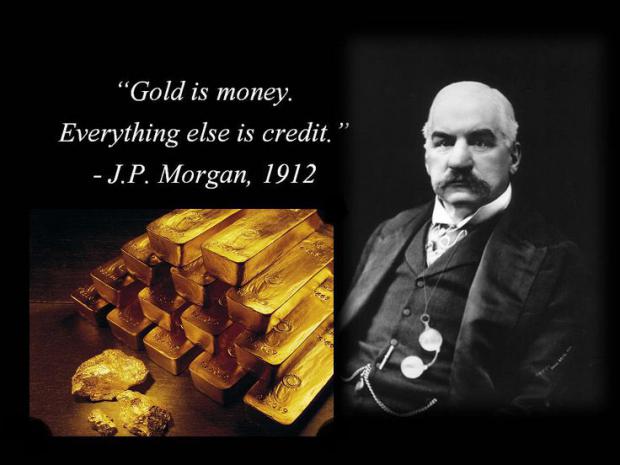
In his latest note, JP Morgan executive director of global commodities research Greg Shearer projects the price of gold will average around $2,175 an ounce by the fourth quarter of 2024. That would represent an 11% increase from the current price.
Shearer anticipates the end of the Federal Reserve hiking cycle after the July meeting with a cut likely by mid-2024. He said there is even further upside potential for the yellow metal if the US economy falls into a recession. The deeper the recession, the more the Fed will have to cut interest rates, which is more supportive of gold.
We're in a very prime place where we think gold ownership and long allocation to gold and silver is something that acts as both a late cycle diversifier and something that will perform as we look to the next sort of 12, 18 months."
With much stronger-than-expected second-quarter GDP growth and continued labor market strength, a growing number of people in the mainstream now think the US has escaped the clutches of a recession despite the Fed driving interest rates to the highest level in 16 years. Federal Reserve Chairman Jerome Powell said staff economists at the central bank now project a noticeable slowdown in growth starting later this year, "But given the resilience of the economy recently, they are no longer forecasting a recession."
But there are plenty of signs that a recession is looming, including 15 consecutive drops in the Index of Leading Economic Indicators (the most consecutive negative prints since 2007-2008), an inverted yield curve, and a rising number of corporate defaults.
Given the fact that the Fed has taken away the economy's lifeblood – easy money – a deep recession seems more likely than not. The economy was built on artificially low-interest rates and quantitative easing. We saw what happens to an over-leveraged economy when the Fed takes away the easy money back in 2008. The situation is much worse today than it was then, with more debt and more malinvestments.