










Breaking News
 This is the future we shall bring into being
 Elon Musk's Vision For The Future Looks Like A Movie
 Phosphorus Munitions Fired by Israel Burn Groves, Orchards in Southern Lebanon
 Iran's IRGC Warns It Will Expand 'Geography of the War' If the US Attacks Again
Top Tech News
 BEYOND THE MOON: NASA plans a nuclear-powered fleet to push DEEPER into space
 Big Oil Backs Mazama's $135 Million Bet On Superhot Geothermal
 Quantum compass takes flight on Northrop's Lumberjack drone
 Terrifying AI Behavior Even Its Creators Couldn't Explain
 WW3 Near-Miss? AI Hallucinated Nuclear Weapons Components Aboard Chinese Vessel Bound For Iran
 Stripe Is Building the Toll Road for the Machine Economy
 Toyota Dakar hopeful swaps twin-turbo V6 for hydrogen fuel cells
 4-min turbo-inflatable cubic camp castle is now available in the USA
 Researchers Used Claude To Hack OpenAI Employee Accounts
 Chinese Scientists Develop New Oil Refining Method That Cuts Energy Use by 90%



Rolls-Royce's electric plane hits 387 mph to lay claim as world's fastest
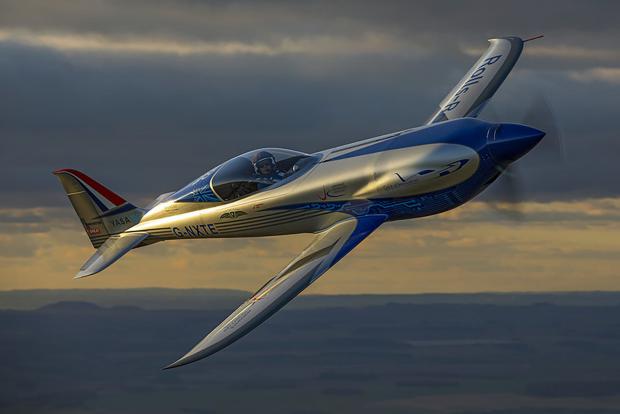
The Spirit of Innovation took to the skies at a UK Ministry of Defence testing site last week where it reached a maximum speed of 623 km/h (387.4 mph), which Rolls-Royce says not only makes it the fastest electric aircraft, but the world's fastest electric vehicle of any kind.
From the outset, the Spirit of Innovation was built from the ground up to become the world's fastest electric airplane, taking aim at the 210 mph (338 km/h) set by Siemens in 2017. The aircraft is propelled by a 500-hp (400-kW) all-electric powertrain and battery pack of 6,000 cells, described as the most energy-dense ever integrated into an aircraft.
The Spirit of Innovation completed its first taxi tests back in March, and then flew for the first time in September, completing a 15-minute flight and kicking off a more advanced testing phase. The latest outing again took place at the UK Ministry of Defence's Boscombe Down experimental aircraft testing site, and culminated in a trio of world records, according to Rolls-Royce.
This includes climbing to an altitude of 3,000 m (9,840 ft) in 202 seconds, breaking the previous record by 60 seconds, reaching a top speed of 555.9 km/h (345.4 mph) over 3 km (1.9 miles), and achieving a top speed of 532.1 km/h (330 mph) over 15 km (9.3 miles). These three world-record claims have been submitted to the Fédération Aéronautique Internationale for official certification, but the aircraft is said to have also been clocked at 623 km/h (387.4 mph) during these runs, faster than any electric vehicle on the planet, according to Rolls-Royce.
"Flying the 'Spirit of Innovation' at these incredible speeds and believing we have broken the world-record for all-electric flight is a momentous occasion," says test pilot Phill O'Dell. "This is the highlight of my career and is an incredible achievement for the whole team. The opportunity to be at the forefront of another pioneering chapter of Rolls-Royce's story as we look to deliver the future of aviation is what dreams are made of."