










Breaking News
 This is the future we shall bring into being
 Elon Musk's Vision For The Future Looks Like A Movie
 Phosphorus Munitions Fired by Israel Burn Groves, Orchards in Southern Lebanon
 Iran's IRGC Warns It Will Expand 'Geography of the War' If the US Attacks Again
Top Tech News
 BEYOND THE MOON: NASA plans a nuclear-powered fleet to push DEEPER into space
 Big Oil Backs Mazama's $135 Million Bet On Superhot Geothermal
 Quantum compass takes flight on Northrop's Lumberjack drone
 Terrifying AI Behavior Even Its Creators Couldn't Explain
 WW3 Near-Miss? AI Hallucinated Nuclear Weapons Components Aboard Chinese Vessel Bound For Iran
 Stripe Is Building the Toll Road for the Machine Economy
 Toyota Dakar hopeful swaps twin-turbo V6 for hydrogen fuel cells
 4-min turbo-inflatable cubic camp castle is now available in the USA
 Researchers Used Claude To Hack OpenAI Employee Accounts
 Chinese Scientists Develop New Oil Refining Method That Cuts Energy Use by 90%



Nigella sativa (black seed) prevents covid-induced vascular damage, ...
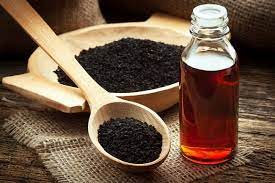
(Natural News) New research published in the journal Vascular Pharmacology shows that Nigella sativa, also known as black seed or black cumin, binds to ACE2 in the lungs, effectively stopping the Wuhan coronavirus (Covid-19) from inducing inflammation and vascular damage.
Researchers out of India investigated the effects of nigellidine, an indazole alkaloid of black seed, using molecular docking for binding to different angiotensin-binding proteins, as well as the Chinese Virus spike glycoprotein. They found that nigellidine "strongly binds" to the Chinese Virus spike protein at what is known as the hinge region or active site opening, which may in turn hamper its binding to the nCoV2-ACE2 surface.
"Nigellidine effectively binds in the Angiotensin-II binding site / entry pocket," the study explains. "Nigellidine showed strong binding to mono / multi-meric ACE1."
This process of ACE blocking could, the study goes on to suggest, restore angiotensin levels and restrict vasoturbulence in Chinese Virus patients, while the receptor blocking could help to stop resulting inflammation and vascular impairment.
"Nigellidine may slow down the vaso-fluctuations due to Angiotensin deregulations in Covid patients," the paper further explains.
"Angiotensin II-ACE2 binding (ACE-value -294.81) is more favorable than nigellidine-ACE2. Conversely, nigellidine-ACE1 binding-energy / Ki is lower than nigellidine-ACE2 values indicating a balanced-state between constriction-dilatation."
Nigellidine also binds to the viral spike proteins, which when taken by Chinese Virus patients, and especially those who fall in the elderly category, could greatly reduce their risk of suffering complications or death